 Events
Louisa Babari — BBR
Exhibition
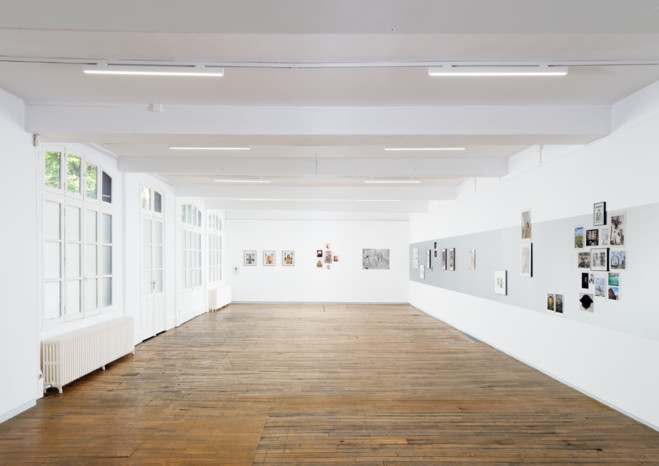
Louisa Babari
BBR
Past: May 30 → August 14, 2026
Louisa Babari is an artist of Russo-Algerian origin, born in Moscow. Her work combines video, sound and photographic installations, graphic works, and sculptures. She explores family memories, struggles of resistance, social and architectural transformations, particularly in former socialist countries and across the African continent. Her work has been exhibited internationally and was awarded the AWARE Prize in 2023, with the exhibition receiving support.
**
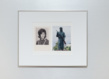
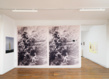
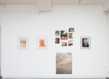
« When I encounter Louisa’s work, I notice unusual perspectives on ruins, architecture, and landscapes that spark my curiosity. The artist focuses on a bush that covers a fragment of a tomb, reconstructs incomplete archival forms against a black background, scattered. She deconstructs and reconstructs texts and images to retain only their sensitive core and highlight the essential, which shapes her aesthetic. In a museum, a low-angle shot crowns an ancient statue with an industrial neon light, while a close-up of a plastic mannequin dressed in a ceremonial gown reveals a hasty repair of the hand wrapped in tape. Her films, within the realm of experimental video and made with minimal resources, always maintain a connection to her family, confronted with political or intellectual arenas. Finally, she infiltrates the streets with Algerian and African poems, an ode to orality and transmission.
Louisa Babari works as an artist with academic reflexes: she reads, collects, and reconstructs history—her family’s and her close ones’, as well as that of her country, Algeria—creating a vast body of work that bears witness to the complexity of the past. Her work, with its punk elegance, generosity, and discreet memories, acts as a portrait of “territories of affect” that she stages in her exhibitions.
With a title reminiscent of a rap album, BBR condenses and preserves the ancient Numidian history, tracing back to the Aurès, where her ancestors resisted Roman and Arab imperial conquests and participated in the war of independence.
In a rhizomatic approach, stone ultimately remains the central motif of the artist’s practice. Almost always, a fragment of a tomb, architecture, or statue appears casually in her unexpected framing. The “imperfect archives,” almost abstract, continue to bear witness in this publication, which brings together the two simultaneous exhibitions in Marseille and Troyes. »
Maëla Bescond