 Artists
Hsien Hsien Chu
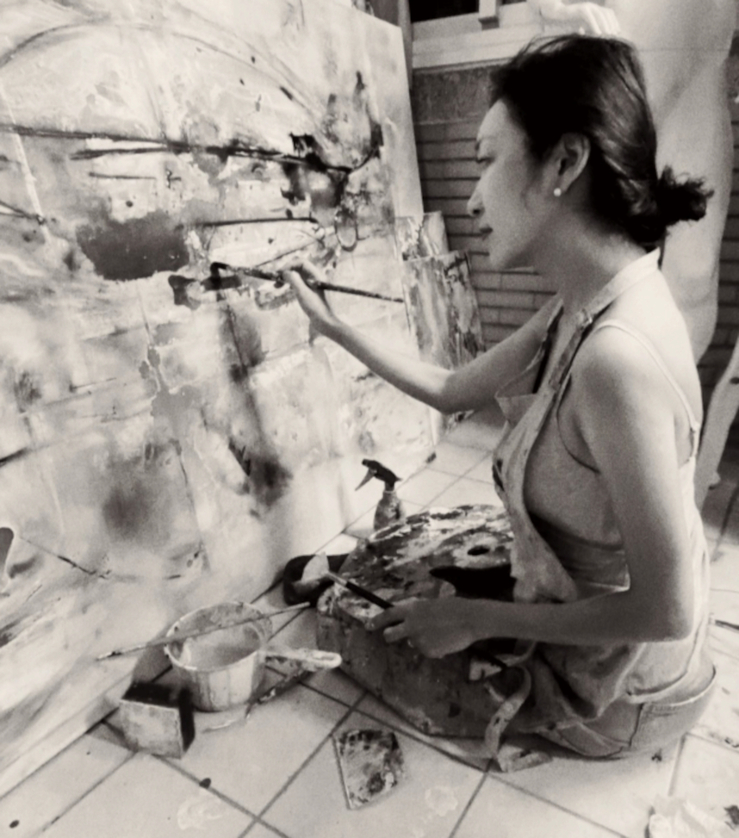
 Portrait de l'artiste Hsien Hsien Chu
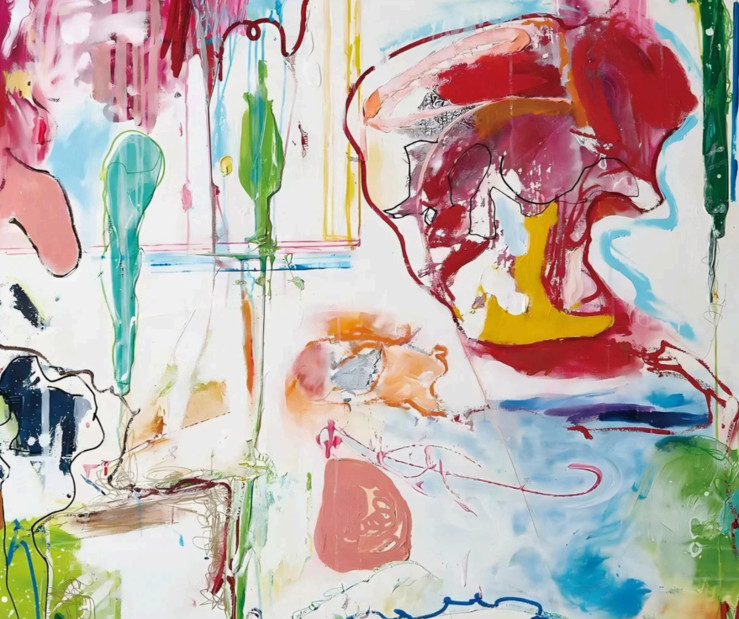
 Hsien Hsien Chu, Vivid Vanitas, 2025 (Détail) — Acrylique sur toile -145,5 x 112 cm
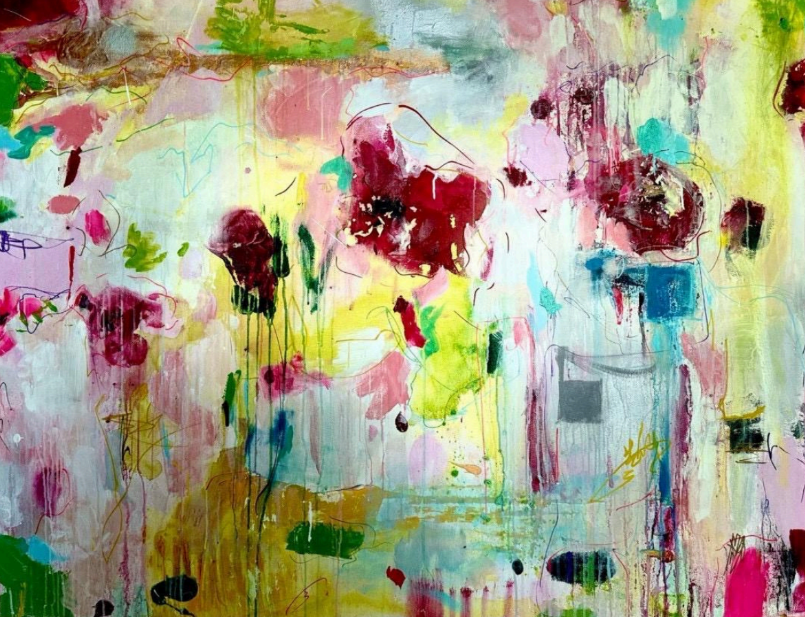
 Hsien Hsien Chu, Bloom, 2025 — Acrylique sur toile — 112 x 145,5 cm
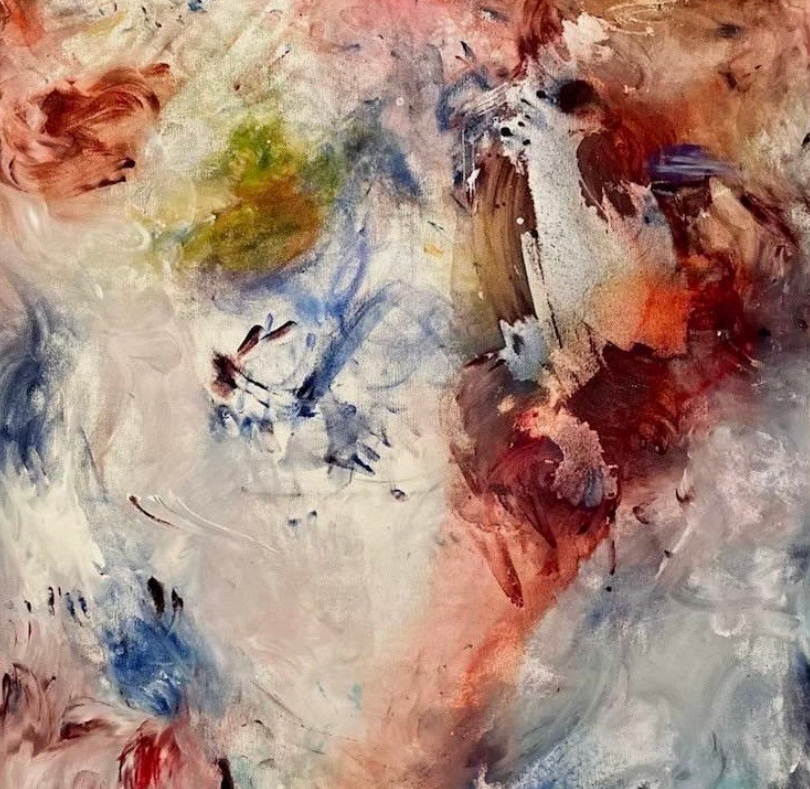
 Hsien Hsien Chu, Sans titre — Acrylique sur toile — 116,5 x 91 cm, 2023
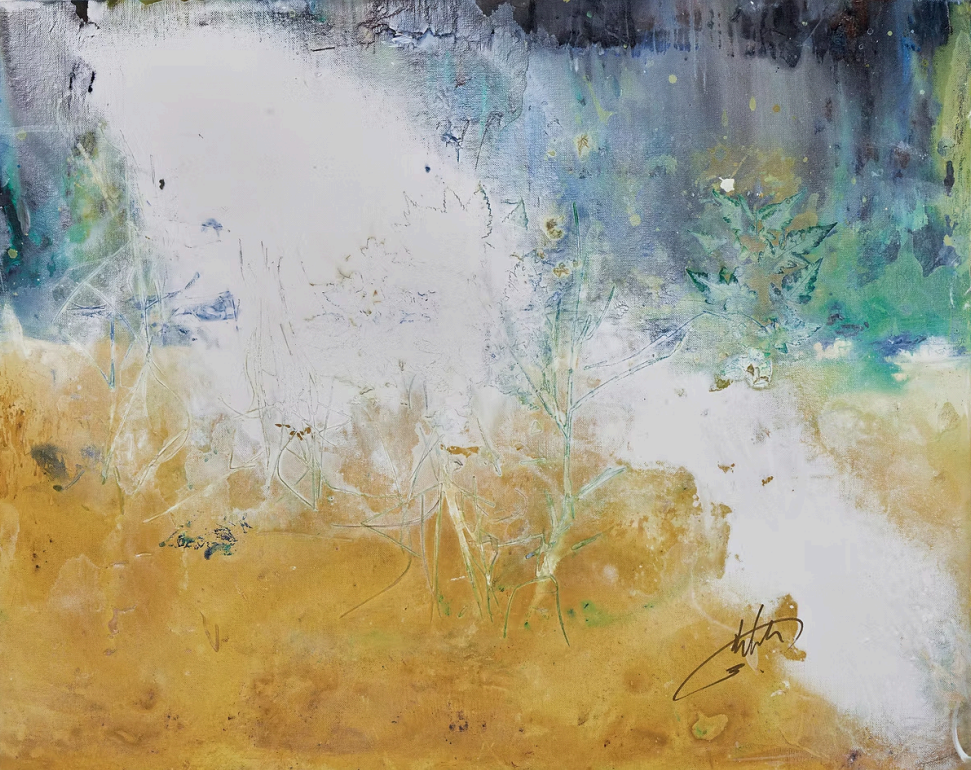
 Hsien Hsien Chu, Sans titre, 2022 — Peinture à l’huile sur toile — 91 x 72,5 cm
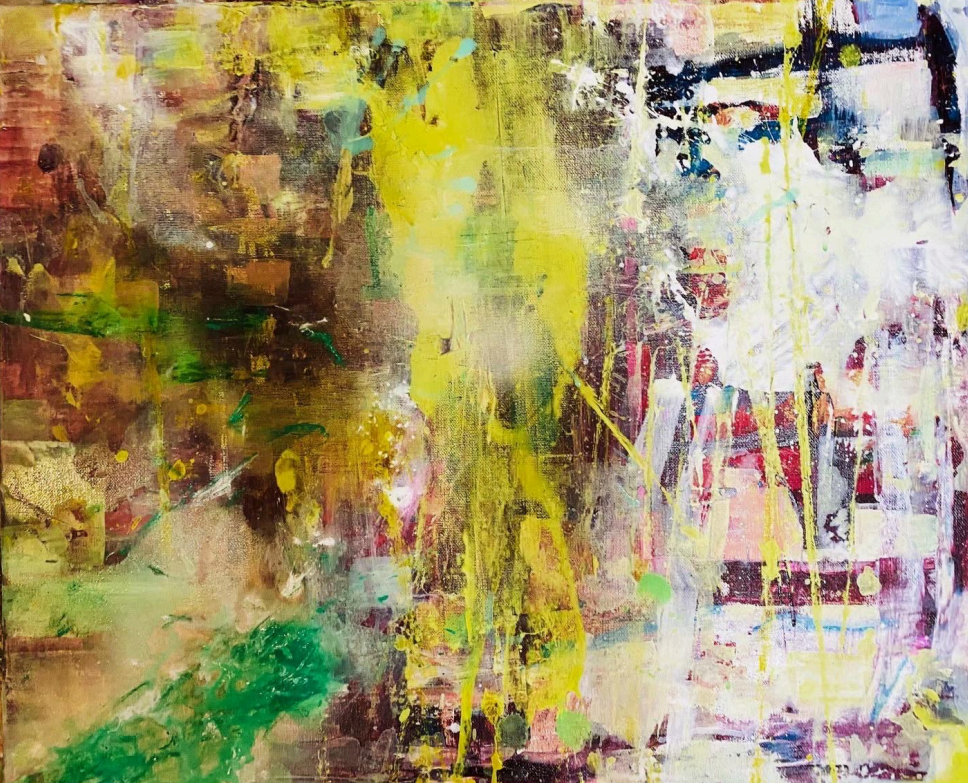
 Hsien Hsien Chu, I, Me, Myself, 2022 — Acrylique sur toile — 65 x 53 cm
CHU Hsien Hsien began her painting practice in 2019, transitioning from realist works to abstraction. She was selected for the 2022 Salon d’Automne in Paris and received the Art Excellence Award from France’s Circle Art Foundation, among many other international honors. In 2022, she held her first solo exhibition in Taichung, presenting 20 abstract paintings and drawing a strong response from the art community.
From 2022 to 2023, her work The Window of Hope received the Circle Art Foundation’s Excellence distinction and was exhibited in October at Grande Halle de La Villette, Paris. In August 2024, she won two prizes at the World Art Award (WAA) for The Window and Dancing Of The Flowers. In December 2024, she exhibited two works—Struggling and Interchange—at Red Dot Miami. Her solo exhibition in Tokyo was titled 色の交流 (Exchange of Colors). In June 2025, she presented Bloom and Vivid Vanitas at The London Art Gathering (London Art Festival). In September 2025, she exhibited her abstract series Silent Ignition at Carré de la Farine, Versailles. In February 2026, she shows Silent Crash at Art Capital at the Grand Palais, Paris.
CHU Hsien Hsien had a Master’s degree in Education at a university in Leeds, UK. After returning to Taiwan, she worked across photography, fashion design, and painting. In 2022, she received recognition from the Luxembourg Art Prize and was selected for the Salon d’Automne in Paris. In 2023, she won a Bronze Prize at the Annual Painting Competition in Hong Kong (Shang Culture). In 2024, she was awarded 5th place worldwide in the Abstract category and 6th place worldwide in the Non-Realistic Floral category at the World Art Award (USA).
Couleur NU — Text by Wei-Yang Lee
Artist CHU Hsien Hsien unfolds a visual field of saturated colors and dense gestures. Reclaiming a vocabulary drawn both from Chinese painting and abstract expressionism, she builds a pictorial grammar of luxuriant images and teeming scenes. Beneath the brilliance of the surfaces, the painting opens onto an investigation shot through with tensions: assertion and vulnerability, power and withdrawal. Painting becomes a way of regaining rhythm, of finding one’s own cadence again—against the grain of everyday friction.
Couleur NU refers to two gestures: to undress and to eclipse. These two movements offer a possible reading of CHU Hsien Hsien’s practice. Her painting brings to light the conditions of appearance: what the gaze projects, what the surface holds back, what desire displaces. The idea of NU here—nudity in French—also evokes, in Chinese, woman: 女 (nǚ). Between these two linguistic and graphic codes emerges an unstable state of the visible: what shows itself without yielding, what is exposed without settling. The field of desire then shifts: from the face and one’s “mien” (what is inscribed on the skin), to perceptible form, and then to beauty as a force of attraction—toward the erotic. In this movement, color activates a relation to nature, to affect, to what unsettles. It becomes a force of contact, an operator of intensity, a threshold.
Queer abstract expressionism: slowness, matter, the body’s decision At the time of AI when images and digital platforms accelerate self-exposure even further and impose an economy of visibility, CHU Hsien Hsien returns to painting as a material necessity: canvas, acrylic, the work of the hand. She paints on the floor. The canvas, tilted or set upright in front of her, becomes a site of confrontation. She constructs a surface as coherence, as proof of self; painting, meanwhile, shifts and withholds. Narcissism cracks.
Her method proceeds in layers. Each layer reactivates the previous one, camouflages it, diverts it, forces it to coexist with what comes after. The painting becomes a space where time thickens: the canvas acts like a seismograph, recording the impact of what cuts through. To undress happens through the alternation of veiling and unveiling.
In revisiting abstract expressionism, CHU Hsien Hsien does not reproduce a virilist imaginary—artist-as-hero, sovereign body, pictorial decision as conquest. Where Pollock’s all-over and the mediatized performance fed a mythology of the gesture, and where De Kooning sustained the friction between abstraction and figure in a zone charged with desire, violence, and domination, she reactivates gestural intensity otherwise. The gesture turns away from performance. It serves to find a rhythm, to take care, and to compose with trouble.
Painting like reading cards For CHU Hsien Hsien, painting resembles a form of reading close to divination, and is often accompanied by drawing and photography. Her renewed depiction of inanimate elements restarts meaning as a game with the self: it transforms the surface into a space of questioning, and leaves problems suspended—like pentimenti within the thickness of pigment. The layers operate like a game of chance: they bring correspondences to the surface, reinterpret figures, and thus reshuffle the enigma.
From a quasi “quantum” perspective on art history—as if the past coexisted with the present—her painting functions like a palimpsest, nourished by material and visual sources (drawings, photographs, fragments): to write, rewrite, superimpose, hide, reference, let layers appear; to hold together the enclosure of the self while opening to the other.
“I think color is the most mysterious thing in our environment. It is through color that I see the world, and it is also what leads me to paint: they are alive, luminous, crossed by the circulation of emotions, elements, and energies within us.” — CHU Hsien Hsien
Is this your profile? Do you represent this artist?
Claim this artist profile