 Events
Booth & Both — Gordon Matta-Clark, Dennis Oppenheim, Leonardo Cremonini, Leoncillo, Manuela Cirino, Bepi Romagnoni, Giacinto Cerone
Exhibition

Booth & Both
Gordon Matta-Clark, Dennis Oppenheim, Leonardo Cremonini, Leoncillo, Manuela Cirino, Bepi Romagnoni, Giacinto Cerone
In 6 days: October 19 → 25, 2026
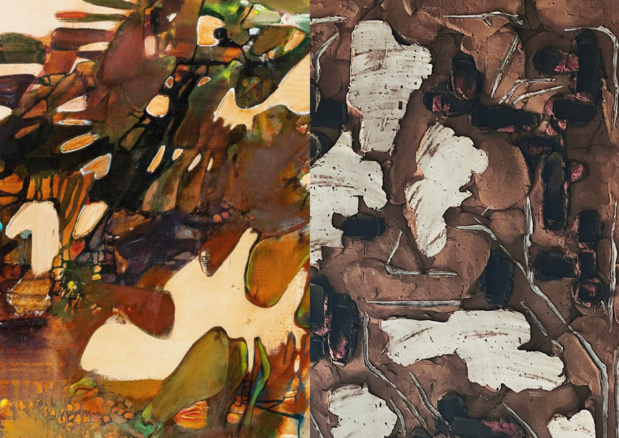
Rather than proposing a conventional group exhibition, Booth & Both is conceived as a series of encounters. The project draws on a longstanding curatorial approach of Montrasio Arte: placing distinct artistic practices in proximity in order to activate relationships that are not necessarily historical or explicit, but emerge through the works themselves—through affinities, frictions, shifts in scale, material, gesture and ways of looking. The exhibition brings together four pairings: Gordon Matta-Clark and Dennis Oppenheim; Leonardo Cremonini and Leoncillo; Leonardo Cremonini and Manuela Cirino; Bepi Romagnoni and Giacinto Cerone. The pairings connect artists across different generations and practices, while resisting the idea of direct influence or linear continuity. What emerges instead is a field of tensions: between space and matter, construction and destruction, observation and embodiment, image and object.
The dialogue between Dennis Oppenheim and Gordon Matta-Clark has a precise historical point of departure. The two artists first encountered one another in the context of Earth Art, the seminal 1969 exhibition at Cornell University, Ithaca, curated by Willoughby Sharp, which brought together artists working directly with landscape and the environment. Oppenheim was already an established figure within the emerging fields of conceptual and environmental art; Matta-Clark, recently graduated, was at the beginning of a practice that would radically redefine the relationship between architecture, space and the body. Their encounter opens a particularly fertile line of inquiry into the transformation of landscape and architecture as artistic material.
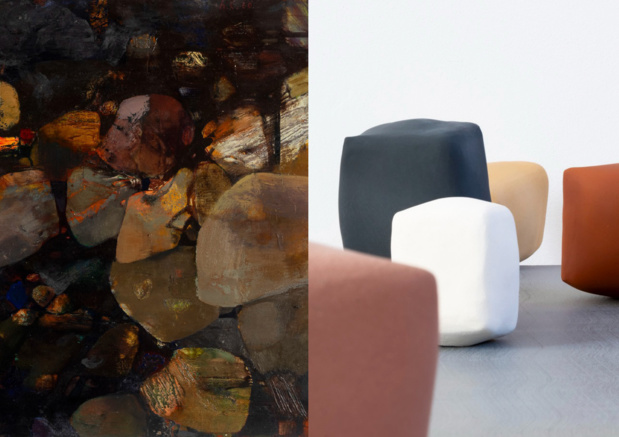
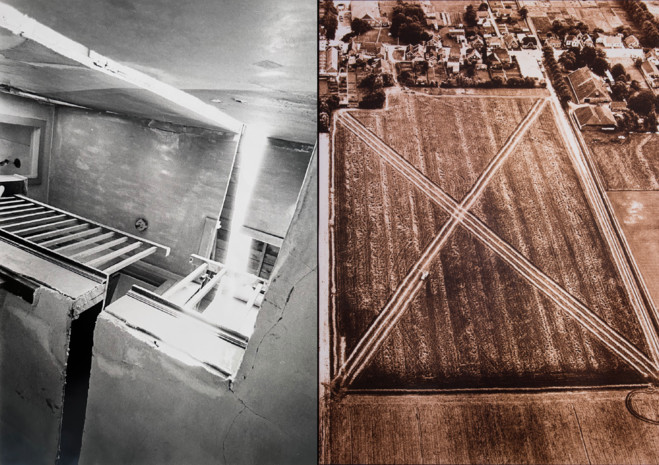
The exhibition brings together significant works from both practices, including Oppenheim’s Cancelled Crop (1968) and Slide Dissolve (1973), alongside Matta-Clark’s Splitting: Interior (1974) and Office Baroque (1977). Seen together, these works reveal two different strategies for destabilising the spaces we inhabit: Oppenheim through intervention, displacement and conceptual operations on the landscape; Matta-Clark through incision, subtraction and the radical opening of architecture.
The pairing of Leonardo Cremonini and Leoncillo explores the relationship between space and the human figure that inhabits it. Their languages are profoundly different, yet both artists approach the figure not simply as a subject, but as a site of psychological, physical and spatial tension.
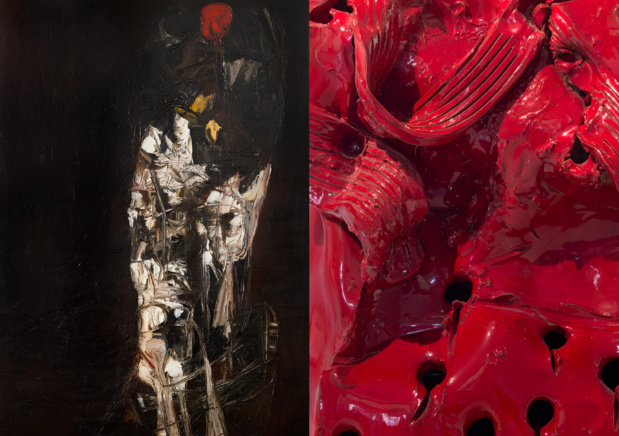
Cremonini’s paintings construct ambiguous environments in which perception continually slips between observation and introspection. In Leoncillo’s sculpture, by contrast, clay becomes the terrain on which gesture, fracture and metamorphosisRather than proposing a conventional group exhibition, Booth & Both is conceived as a series of encounters. The project draws on a longstanding curatorial approach of Montrasio Arte: placing distinct artistic practices in proximity in order to activate relationships that are not necessarily historical or explicit, but emerge through the works themselves—through affinities, frictions, shifts in scale, material, gesture and ways of looking.
The exhibition brings together four pairings: Gordon Matta-Clark and Dennis Oppenheim; Leonardo Cremonini and Leoncillo; Leonardo Cremonini and Manuela Cirino; Bepi Romagnoni and Giacinto Cerone. The pairings connect artists across different generations and practices, while resisting the idea of direct influence or linear continuity. What emerges instead is a field of tensions: between space and matter, construction and destruction, observation and embodiment, image and object. The dialogue between Dennis Oppenheim and Gordon Matta-Clark has a precise historical point of departure. The two artists first encountered one another in the context of Earth Art, the seminal 1969 exhibition at Cornell University, Ithaca, curated by Willoughby Sharp, which brought together artists working directly with landscape and the environment. Oppenheim was already an established figure within the emerging fields of conceptual and environmental art; Matta-Clark, recently graduated, was at the beginning of a practice that would radically redefine the relationship between architecture, space and the body. Their encounter opens a particularly fertile line of inquiry into the transformation of landscape and architecture as artistic material.
The exhibition brings together significant works from both practices, including Oppenheim’s Cancelled Crop (1968) and Slide Dissolve (1973), alongside Matta-Clark’s Splitting: Interior (1974) and Office Baroque (1977). Seen together, these works reveal two different strategies for destabilising the spaces we inhabit: Oppenheim through intervention, displacement and conceptual operations on the landscape; Matta-Clark through incision, subtraction and the radical opening of architecture.
The pairing of Leonardo Cremonini and Leoncillo explores the relationship between space and the human figure that inhabits it. Their languages are profoundly different, yet both artists approach the figure not simply as a subject, but as a site of psychological, physical and spatial tension.
Cremonini’s paintings construct ambiguous environments in which perception continually slips between observation and introspection. In Leoncillo’s sculpture, by contrast, clay becomes the terrain on which gesture, fracture and metamorphosis
The artists
-
Dennis Oppenheim
-
Gordon Matta Clark
-
Leonardo Cremonini
-
Leoncillo
-
Manuela Cirino
-
Bepi Romagnoni
-
Giacinto Cerone