 Events
The House on Utopia Parkway — Joseph Cornell’s Studio Reimagined by Wes Anderson
Exhibition
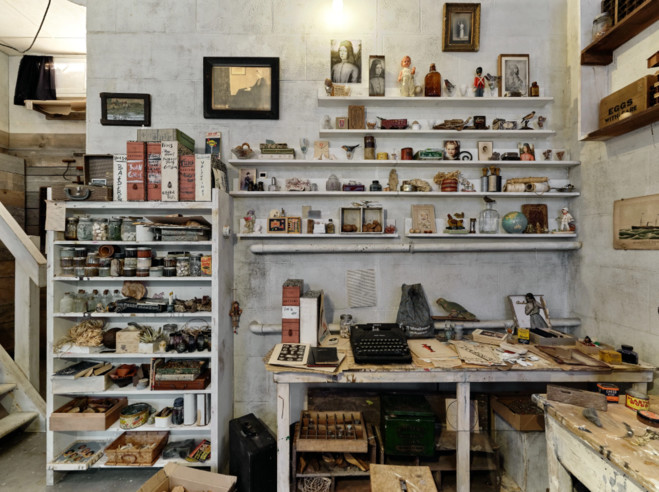
The House on Utopia Parkway
Joseph Cornell’s Studio Reimagined by Wes Anderson
Past: December 16, 2025 → March 14, 2026
Gagosian is pleased to announce The House on Utopia Parkway: Joseph Cornell’s Studio Re-Created by Wes Anderson, an exhibition conceived by curator Jasper Sharp and the acclaimed American filmmaker. Opening December 16, 2025, it brings the artist’s New York studio to the heart of Paris, transforming the storefront gallery at 9 rue de Castiglione into a meticulously staged tableau—part time capsule, part life-size shadow box—for the first solo presentation of Cornell’s work in Paris in more than four decades.
Joseph Cornell (1903–1972) could not draw, paint, or sculpt, and received no formal art education, yet he produced one of the most original and extraordinary bodies of work of any artist in the twentieth century. Though he never left the United States, the city of Paris lived vividly in his imagination. He wandered its streets through postcards, guidebooks, and conversations with his friend Marcel Duchamp, and dedicated dozens of artworks to its poets, palaces, and historical protagonists. In the modest family home on Utopia Parkway in Queens, New York, that he shared with his mother and brother, he worked in a basement studio lined with shelves of whitewashed shoeboxes and tins filled with objects gathered during his forays through Manhattan bookstores, antique shops, and neighborhood dime stores. He referred to this collection of prints, feathers, maps, marbles, toys, seashells, and other ephemera as his “spare parts department.” It provided the raw materials for intricate collages, assemblages, and shadow boxes that would influence generations of artists—from Yayoi Kusama, Robert Rauschenberg, Betye Saar, Carolee Schneemann, and Andy Warhol to many working today.
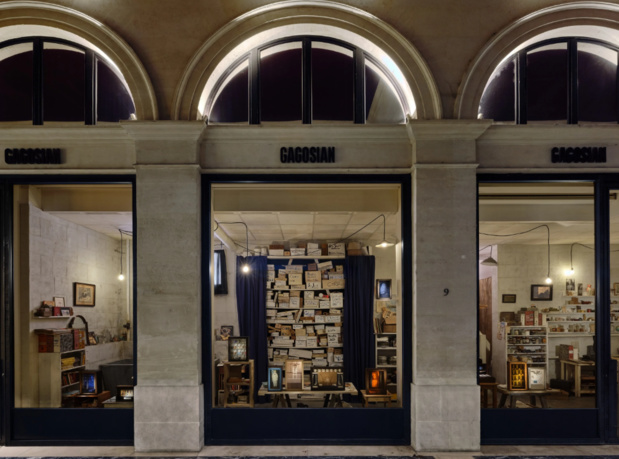
It is this world that Anderson and several of his longtime collaborators, together with exhibition designer Cécile Degos, now bring to life in Paris through more than three hundred objects and curiosities from Cornell’s own collection. Within this evocative setting, several examples of the artist’s shadow boxes—poetic reliquaries of memory and imagination—are on view, including Pharmacy (1943), which was once owned by Teeny and Marcel Duchamp and is modeled after an antique apothecary cabinet. Untitled (Pinturicchio Boy) (c. 1950), an iconic work from Cornell’s celebrated Medici series, frames multiple reproductions of Bernardino Pinturicchio’s Portrait of a Boy (c. 1480–82) behind amber-tinted glass, juxtaposing them with guidebook maps of Italian streets and wooden toys. A Dressing Room for Gille (1939) pays homage to Jean-Antoine Watteau’s Pierrot (1718–19), also known as Gilles, in the collection of Musée du Louvre, a short walk from the gallery. And Blériot II (c. 1956) honors Louis Blériot, the French inventor who was the first person to make an engine-powered flight across the English Channel. Alongside these works are loans from the Joseph Cornell Study Center at the Smithsonian American Art Museum in Washington, DC, including a number of unfinished boxes by the artist that provide a rare glimpse into his process.
The House on Utopia Parkway can be viewed through the gallery’s street-facing window, transforming the space into a life-size Cornell box. Lit softly from within, it recalls the many hours Cornell spent working late into the night.
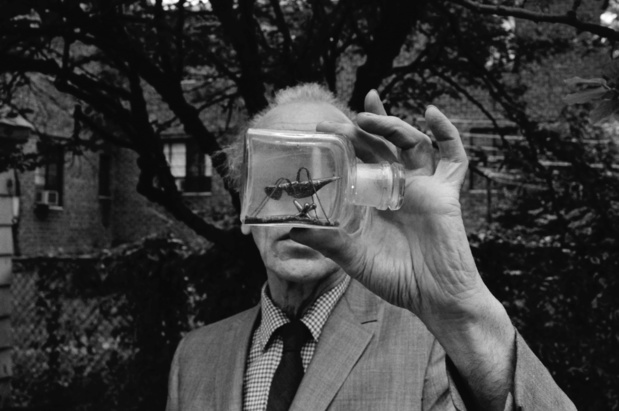
Joseph Cornell was born in 1903 in Nyack, New York, and died in Queens, New York, in 1972. Collections include the Centre Pompidou, Paris; Tate, London; Museo Nacional Centro de Arte Reina Sofía, Madrid; Museum of Modern Art, New York; National Gallery of Art, Washington, DC; Art Institute of Chicago; and Los Angeles County Museum of Art. Cornell first exhibited at Julien Levy Gallery, New York, in the landmark 1932 exhibition Surréalisme. Institutional exhibitions include the Pasadena Art Museum (1966–67); Museum of Modern Art, New York (1980–81, traveled to Whitechapel Gallery, London; Kunsthalle Düsseldorf, Germany; Palazzo Pitti, Florence, Italy; Musée d’Art Moderne de la Ville de Paris; and Art Institute of Chicago, 1981–82); Navigating the Imagination, Smithsonian American Art Museum, Washington, DC (2006–07); Wanderlust, Royal Academy of Arts, London (2015, traveled to Kunsthistorisches Museum, Vienna, 2015–16); and Birds of a Feather, Metropolitan Museum of Art, New York (2018).
Writer, director, and producer Wes Anderson was born in 1969 in Houston, Texas. His films include Bottle Rocket (1996), Rushmore (1998), The Royal Tenenbaums (2001), The Life Aquatic with Steve Zissou (2004), The Darjeeling Limited (2007), Fantastic Mr. Fox (2009), Moonrise Kingdom (2012), The Grand Budapest Hotel (2014), Isle of Dogs (2018), The French Dispatch (2021), and Asteroid City (2023), as well as the short film compilation The Wonderful Story of Henry Sugar and Three More (2024). His latest film is The Phoenician Scheme, released this year by Focus Features.
Exhibition presented in the space at 9 rue de Castiglione, 75001 Paris
4, rue de Ponthieu, 75008 et 9, rue de Castiglione, 75001
ParisT. 01 75 00 05 92 — F. 01 70 24 87 10
Opening hours
Tuesday – Saturday, 11 AM – 7 PM
The artists
-
Wes Anderson
-
Joseph Cornell