Clément Cogitore — Galerie Nathalie Obadia, Paris
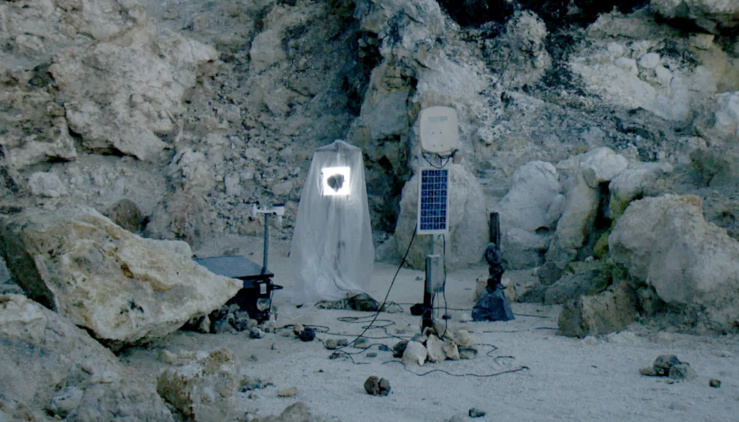
Exploring the history and mythology of the ephemeral island of Ferdinandea, which rose above the surface in 1831 following the eruption of the volcano of the same name before sinking once more beneath the sea, Clément Cogitore revisits at Galerie Nathalie Obadia a body of work centred on its traces and memory, extending presentations previously shown at the Madre Museum in Naples and at the Mucem.
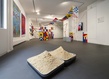
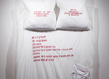
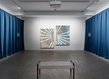
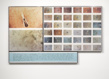
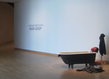
four video works, including a central piece running around forty minutes, alongside a display case of archival material and photographic prints overlaid with fragments of text, the artist and filmmaker constructs a sombre, restrained installation in which darkness, mystery and absence become the substance of a narrative that is undeniably intriguing yet ultimately somewhat frail. From this ’island that does not exist’, an object of heterodox anxieties ranging from superstitious beliefs attached to unusual geographical phenomena to enduring scientific uncertainty surrounding the extent and risks of the volcanic activity from which it emerged, as well as of political and economic ambitions, having once reflected the colonial aspirations of European powers and potentially serving as a maritime transit point, Cogitore derives a series of visions directly and indirectly connected to its reality. These works rely on dramatic tension, mystery, radical fragmentation of narrative and polyphony.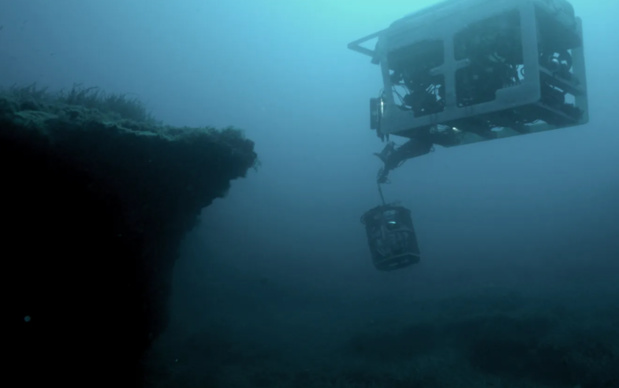
While this blending of genres has an undeniable allure, its limitations quickly become apparent in the conspicuous absence of a clearly articulated critical framework capable of creating distance, reassessing the conditions of perception and placing the island’s history within a broader aesthetic perspective. The political force of the project, though undeniable, dissolves into a grandiose mysticism that blurs competing visions only to elevate its own lack of position. The juxtaposition and interweaving of testimonies, scientific data, archival documents and invented elements lends a certain scale to the presentation and confirms the artist’s considerable talent as a storyteller. Yet the subject, submerged beneath a constant effort to justify its significance through gravity and obscurity, drifts towards the conspiratorial. It never moves beyond the level of suggestion and ultimately fails to sustain its central idea beyond the time spent within its darkness.
From this form of dramatic impressionism emerges only an uneven parable suspended awkwardly between genres, fiercely earnest yet strikingly distant from any real conceptual, imaginative or formal force. Its gestures of surface drama, the incessant cutting of images, manipulated voices and their peremptory tone, dissolve into a purely aestheticised rhetoric of effect.
The disappointment is all the greater because the subject itself, an island that surfaced for only four months and, according to legend, only four times since antiquity, could hardly be more compelling. Its richness and depth seem almost limitless. Even the question of its identity is fascinating. Does an island cease to be an island when none of those who name it can set foot upon its shores? When, like the man who, according to the poet, cannot be an island unto himself, it alternately vanishes and reawakens, burns and drowns? Irony and fantasy, in other words the discerning eye of a curator, would almost certainly have provided the perspective necessary to unlock the full depth of this subject.
One should nevertheless acknowledge the relevance of Cogitore’s ambition to reinvent the documentary form and his commitment to fiction and environment as tools for creating a space of reflection. Like any major undertaking, the project may still need to test itself further, to continue experimenting before arriving at a form of genuine clarity and intellectual fertility.