Gongle — La Terrasse, Nanterre
At La Terrasse in Nanterre, the Gongle collective unfolds a compelling and thought-provoking perspective on bike life ; an autodidactic, communal motorcycle practice in public space that blends performance, appetite for risk, personal investment and a reclaiming of geography, whether urban or rural.
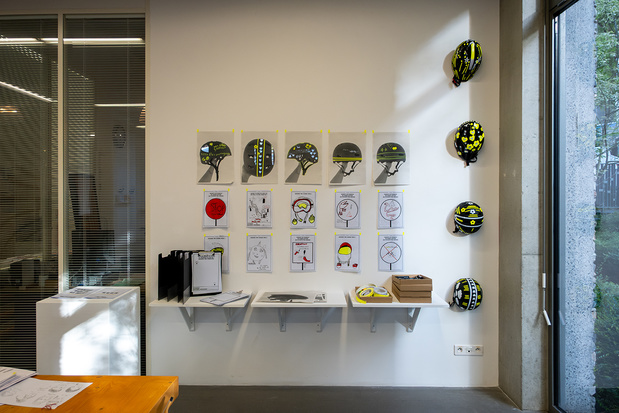
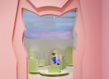
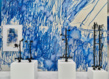
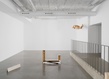
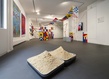
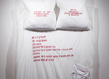
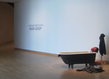
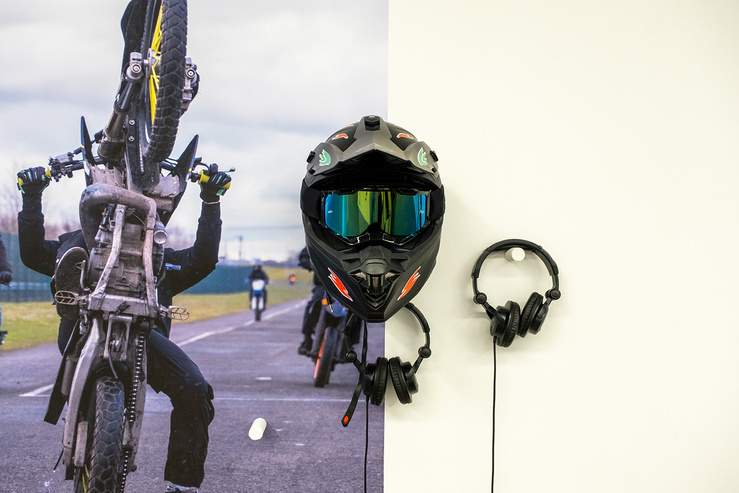
During its creative residency at La Terrasse, the collective approaches the subject through a reimagined and carefully staged visual proposal that functions both as a workspacetoward a planned parade for the exhibition’s closing, and as a display of a reflection still in formation. At the center, a working area hums with sewing machines, printers and an assortment of materials in daily use. Around it, the exhibition space presents photographs, videos, working documents and listening stations. These devices form the core of Avec ou sans casque (“With or Without a Helmet”): motorcycle helmets redesigned for the occasion are paired with headphones through which riders’ testimonies and stories unfold. Rich in meaning and bridging performance and lived practice, the helmet becomes both a vehicle for transmission and a cocoon that distinguishes its wearer through shape and color. This conceptual duality echoes that of the mask (concealing identity while asserting singularity in the public eye) a correspondence the collective readily embraces.
That ambivalence, productively generative, reflects the broader scope of this workshop-exhibition. Its alternative format allows the group to share a discourse that resists any fixed or prescriptive conclusion, instead situating creation of images, research, the construction of a tent, listening spaces, and sculptural installations built from reinvented helmets within an ongoing process. Visitors move through the space with pleasure, guided by beautifully staged photographs, yet what resonates most is the work in progress: the collective itself, available for conversation, along with traces left by previous visitors, workshops, and the spontaneous discussions that inevitably arise, even before any final presentation.
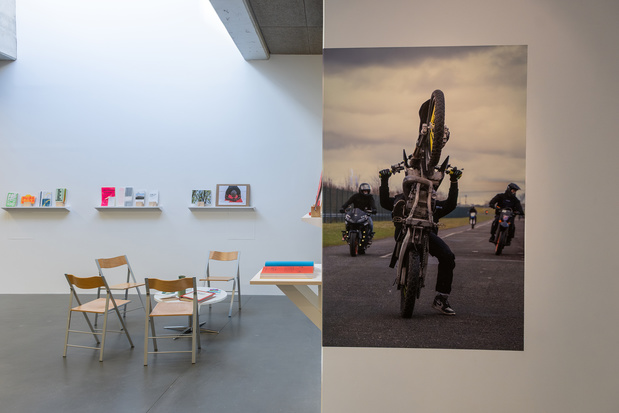
La Terrasse thus pulls off the ambitious feat of offering a panoramic view of a living inquiry while also illuminating the broader activity of a collective that foregrounds the people and places it engages. More than that, the exhibition articulates a genuine visual proposition through a practice that is not only collaborative but corrective ; finding, in situ and through exchange, the means to invent a form rich enough to reshape our own perceptions in turn.