Ruoxi Jin — En questions
Making the possible legends and personal stories all the more beautiful for being impossible is a constant in the work of young artist Ruoxi Jin, who invents a new form of creation for each of her projects.
How did you come to art?
Ruoxi Jin: I felt an urgency to express myself, and that urgency pushed me toward making art. But it was only recently that I realized being an artist is simply a provisional form of life that causes and conditions have brought forth through me. Coming to art is as ordinary as any other path. I had dreamed of being an entomologist, a cook, a musician, a novelist, a dancer—and perhaps all of these could have been my path in another life.
How would you define your practice?
If I try to define my practice, it will slip away the very next moment. What I am sure of is that I want to create connections with people and share an experience. I hope to open spaces where relational chance can be cultivated to the point of generating new stories and situations. Often, this manifests through gestures of assembly.
What impact do you seek to have on the viewer?
A good laugh, sometimes. And also the curiosity to decipher a little enigma.
Do you provide all the keys to understanding or do you leave room for indeterminacy in your work?
I prefer to leave space for indeterminacy so that viewers can grasp and interpret the work in their own way. And when I do provide keys to understanding, they serve to create a shift or disturbance in comprehension.

Can you tell us a few words about the exhibition you are presenting in the Project Room at Plateau?
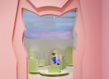
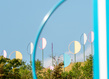
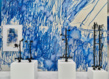
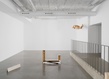
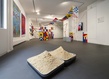
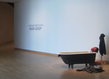
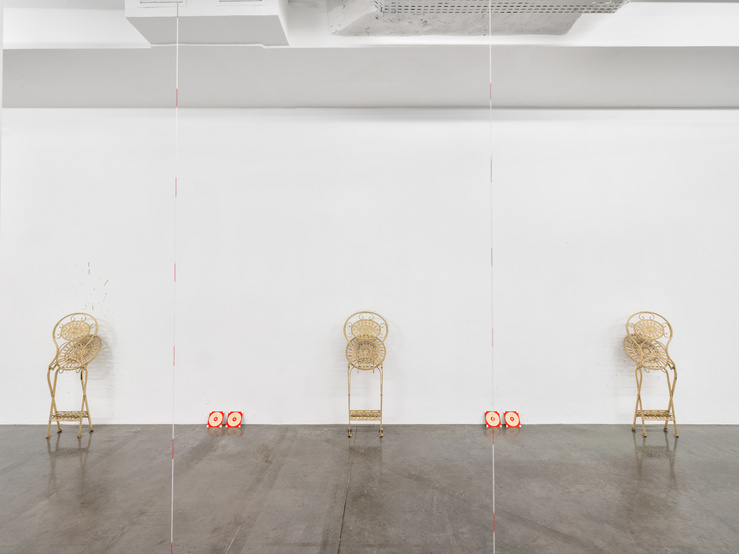
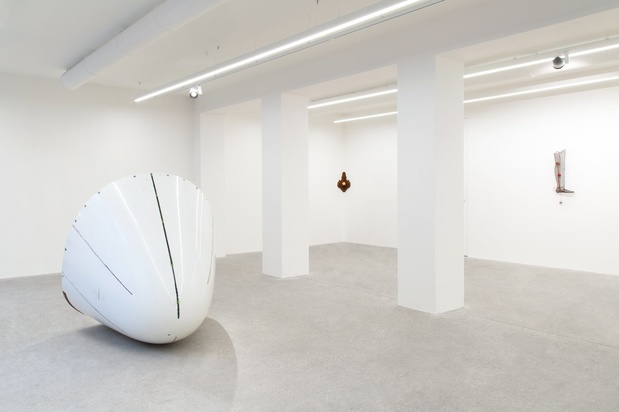
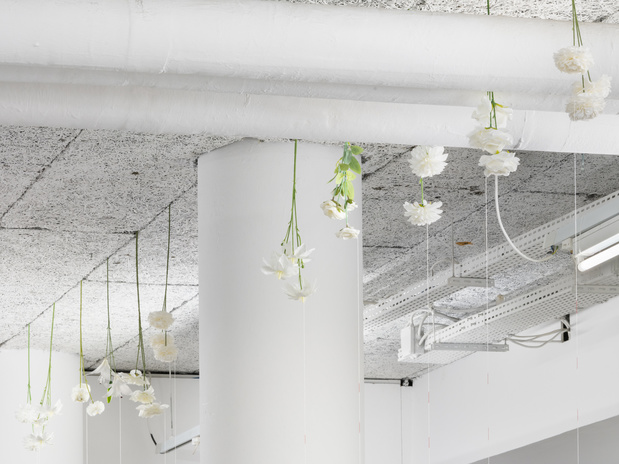
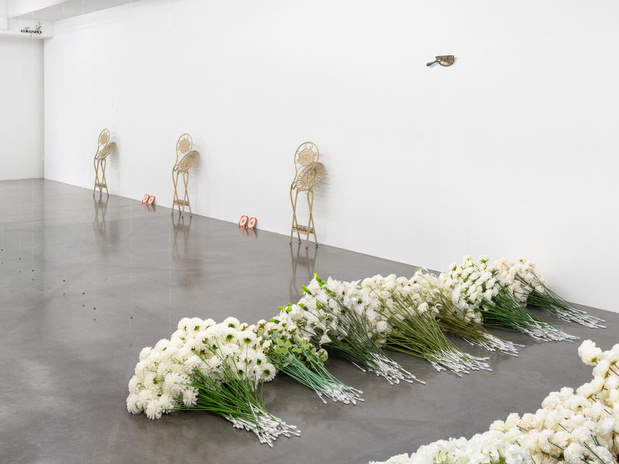
The exhibition in the Project Room is a micro-test of my life. I invested a lot of emotion in it. It’s also a new temporality for me, as I was able to work on site for four weeks—a huge gift from curator Maëlle Dault. It was as if I had moved into the Project Room: my daily life completely changed rhythm. I lived there on the same schedule as the whole team, I had lunch with them every day. When I first arrived to set up, the only clue about the exhibition I was going to develop was my encounter with my studio neighbor, a Chinese woman who organizes Chinese weddings in Paris, through whom I was able to find artificial flowers. The title of the exhibition, MA Félicité, is her name. The pieces came together gradually, nourished by my experiences during those four weeks, in parallel with the time spent in the Project Room. There were moments of beautiful surprise, for example when I discovered that the heating in the FRAC made the fake flowers hanging from the ceiling tremble. A great joy: the feeling that the piece and the space were responding to each other.
Specifically, can you tell us about the titles?
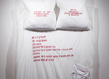
The titles of the works occupy a very important place in this exhibition. They function as relational states of affect that carry a narrative charge. If I list them all together:
Unfortunately yes
Fortunately no
Dry message
Phone call
Say it in Crystals
… red flag, green flag, red flag …
Let it flow
You take everything personally
Not sure yet about tonight
Lake of Indifference
Together, they create a kind of emotional cartography. One of my references is the Carte de Tendre, from which the title Lake of Indifference comes.
Has the practice of exhibition-making changed your way of working?
Yes and no. Yes, because it’s a different format from a book, an album, a nap, a conference, a meditation, an Instagram post… But at the same time, if I treat the exhibition like a book, an album, a nap, a conference, a meditation, or an Instagram post, it doesn’t really change my way of working in the end.
Among the artists of your generation, are there any practices that impress you?
I am impressed by the work of my family doctor, Nassim Sarni. He is a psychiatrist, artist, and comic book author. We collaborate on several projects at the intersection of art and psychiatry. He initiated and organizes a residency at Pitié-Salpêtrière, within the psychiatry department.
Do you have any projects coming up in the next few months?
I am in residence at Pitié-Salpêtrière, in the psychiatry department, where I have been following several patients during their consultations with a psychiatrist since last year. I am currently working on a protocol-based piece in the form of a collective game, which may involve caregivers and patients at the end of my residency. I will have a solo exhibition at CIBRIÁN gallery in San Sebastián, Spain, at the end of May 2026. I would like to experiment with sound and music on that occasion.