Aysha E Arar — La Ferme du Buisson, Noisiel
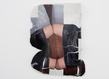
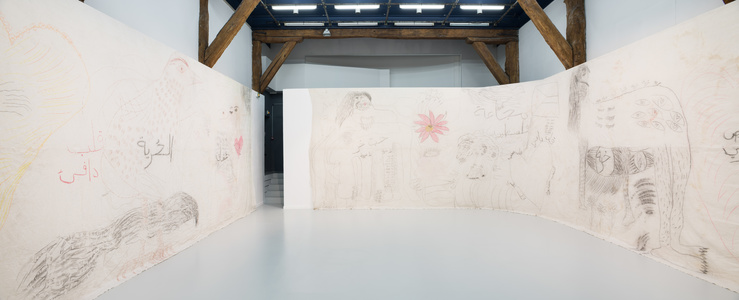
The monumental self-portrait that opens Aysha E Arar’s exhibition at the Ferme du Buisson echoes with screams of terror and rumblings of resistance. A figure caught in a struggle that, from within intimacy, embraces history.
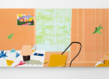
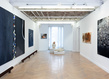
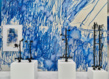
Aysha E Arar — Al Farisa @ La Ferme du Buisson, Centre d’art contemporain from March 15 to July 12. Learn more Trained in performance and coming to painting and drawing almost against the grain, the Palestinian artist from Jaljulia unfolds across media a quest for emancipation in which desire and gender intertwine with the evolution of a territory, its mythology, and its political reality. With Al Farisa (the horsewoman), she stages an imaginary world populated by animal figures, symbols, and emotions, deploying monumental strips of fabric covered with spontaneous and expressive drawings that multiply narrative perspectives and rhythms.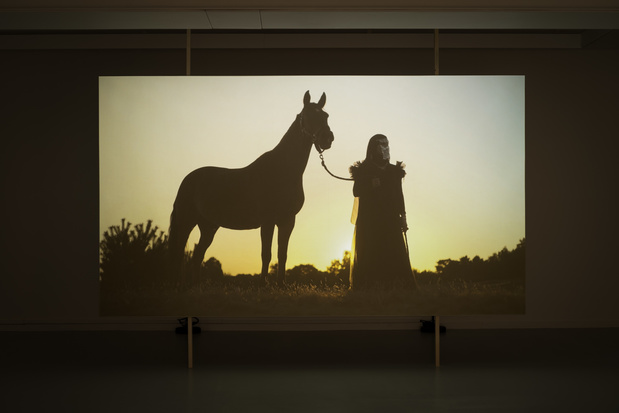
Closely tied to music and singing, which she practices continuously both within and beyond the exhibition as both discipline and breath, the artist offers in her drawing a syncopated succession of feelings and narratives rather than a unified composition. Reflecting the paradoxes of her condition, her work confronts the desire for freedom with a life under constraint, the pleasure of images with a bestiary shaped by longstanding traditions. In a sobriety bordering on austerity, her drawing conveys an experience of dream and compassion, of invocation and assertion, expressing through metaphor a desire for freedom, for dreaming, for composing, for indignation, and for love.
Rooted in a daily life shaped by war and marked by a history of struggle and resistance, her work resonates with both the urgency of a decimated population’s suffering and the ethereal temporality of the legends and hopes that sustain it. Fantasized visions of regained freedom, both collective and personal, stand alongside stark depictions of starving children. Words themselves, inserted abruptly into the compositions, function as an immediate form of expression, resisting the structuring force of language in the face of a reality whose horror continues to undermine rational articulation. Hope appears in vivid strokes, carried by the force of incantation.
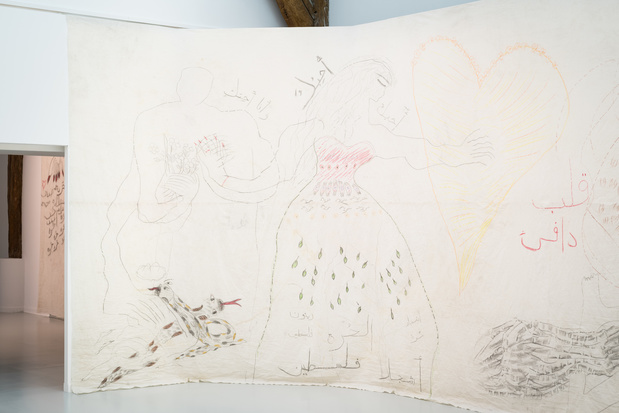
It is precisely her life that Aysha E Arar projects onto the surface, her daily reality infusing and unsettling the line. When water damage affects one of the exhibited works, rather than discarding it, she chooses to preserve it as it is, offering a lesson in the dual nature of artistic expression: giving and letting go, intention and its afterlife in the eyes and hands of others. Everything then becomes a matter of emancipation and the affirmation of independence. Palestine, through its flag, emerges as a recurring figure, both familiar and chimerical, a projection of a future happiness.
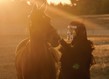
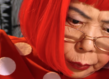
Alongside the monumental works, smaller formats unfold where colors, words, and figures intertwine in organic compositions at the edge of abstraction. A video piece presents the artist as a horsewoman. Moving across registers with direct involvement, her work makes spontaneity, symbolic charge, and emotion inseparable drivers of a total affirmation in which distance would only slow its necessity. Through trace, mark, her face, and the deliberate staging of a self transformed into a character within the mythology she reimagines, Aysha E Arar claims the space available to her as much as she invents it, bypassing decorum and formal refinement in favor of her own gesture, immediate and embodied, carried by her hand and her body within a narrative she renders shared wherever it is shown.
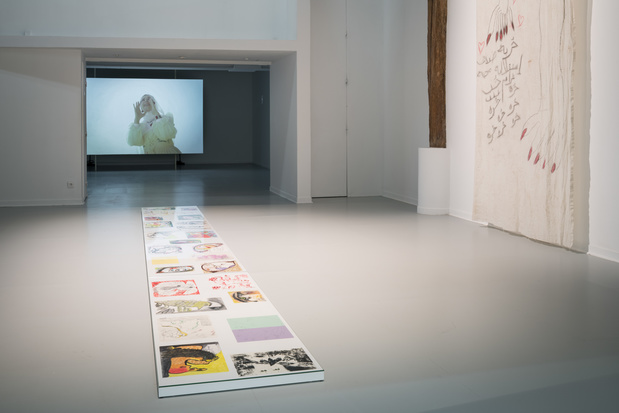
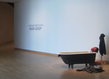
The installation unfolds as a total environment, like entering the very fabric of an imagination where fragments of thought are woven in dispersed order. Arranged in a loop, beginning and end merge, allowing for multiple readings and ultimately emphasizing the significance of each element. For it is always about stories: those Aysha E Arar tells, those she inhabits, and those she writes.