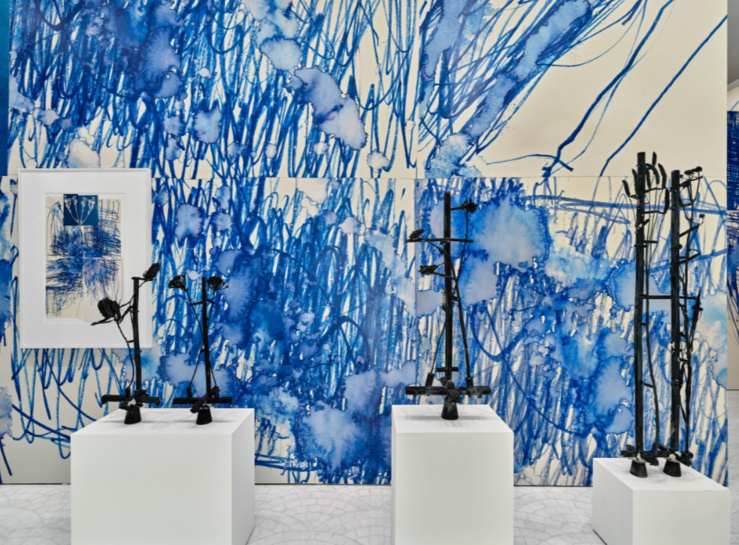
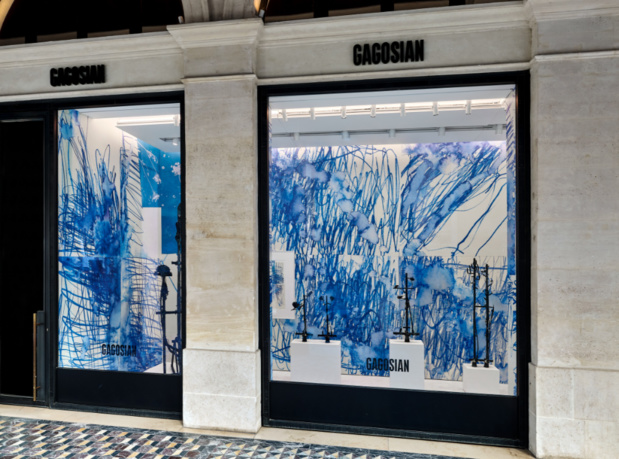
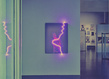
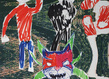
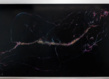
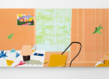
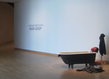
Sterling Ruby, vue de l’exposition TILL DEATH DO US PART, galerie Gagosian, rue de Castiglione, Paris
© Sterling Ruby — Photo : Thomas Lannes
Sterling Ruby — Galerie Gagosian, Paris
Point de vue
Article
July 6, 2026 — By Lana Dali
From the street, Sterling Ruby’s exhibition immediately asserts its presence in the elongated storefront of Gagosian Gallery with a strange symphony of seduction and harshness. An American artist born in 1972, Ruby works across sculpture, painting, ceramics, textiles and drawing, exploring the tensions between beauty and violence, memory and transformation.
Sterling Ruby — TILL DEATH DO US PART @ Gagosian Gallery from June 12 to October 13.
Learn more
Here, the vast blue fields of the Ghosts cyanotypes spill across the walls while the silhouettes of large intertwined flowers, the Bound Flowers, rise from the floor. Their appeal is unmistakable, almost deliberately foregrounded in a display that seems to answer the excesses of Place Vendôme, a district that has become a glittering lure. This directness is the very condition of an experience defined by spectacular silence. Everything appears to want to speak. Traces begin to resemble writing, while the flowers entwine within a profusion of symbols. Yet there is nothing delicate about them. Torn from their original fragility, they stand sharpened in bronze. Their stems cast in metal, their forms stretched and their branching structures frozen, they become blunt bodies, presences that unsettle more than they move. Perhaps this stems from the violence inherent in the casting process itself, which wrests from nature the illusion of permanence and redirects it into sculpture for centuries to come.
Sterling Ruby, vue de l’exposition TILL DEATH DO US PART, galerie Gagosian, rue de Castiglione, Paris
© Sterling Ruby — Photo : Thomas Lannes
A similar transformation affects the works on paper. Ink and cyanotype abandon their lightness and fluidity, fastening themselves forcefully to the gallery walls. Their scale absorbs the viewer, while their density almost pushes the gaze back toward the surface. This contradiction echoes the ambiguity of the installation as a whole, animated by an almost impressionistic energy while openly embracing its symbolic programme, beginning with its highly charged title, Till Death Do Us Part. The flowers frolic in pairs, testing the marital vow of attachment. Yet this attachment exceeds symbolism and collides with the stark reality of death, the very force that ultimately seals the promise of a shared life.
Caught between attraction and repulsion, the symbolic dimension of the work may simply reflect the artificial nature of our conventions. Ruby strips these flowers of spontaneity and naturalness, leaving only what is essential: their encounter with one another and, ultimately, with us.