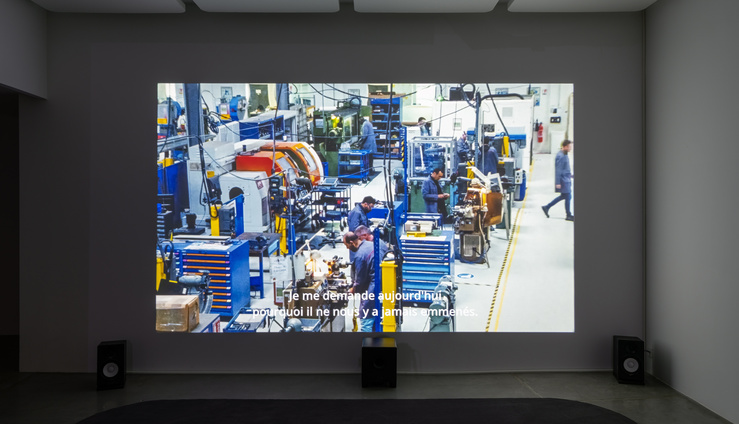
Rayane Mcirdi — Le Plateau, Paris
Inventing its form as much as its format, Rayane Mcirdi’s exhibition at Le Plateau practises an art of cutting and a plastic redistribution of time within the very object of its making: a feature film that projects the artist’s lived experiences and feelings into fiction.
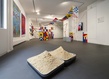
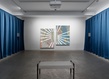
Rayane Mcirdi — Joyeuse retraite papa @ Frac île-de-france, le Plateau from September 24, 2026 to February 21, 2027. Learn more Putting its subject before its effects, Joyeuse retraite papa (Happy Retirement, Dad) bets on sobriety and concision to develop its exploration of this pivotal moment in a life. Powerful sequences from the film are distributed throughout the exhibition space, where the work unfolds through a succession of emotions, exchanges and silences that speak as much of a father’s life, whose moving biography the artist brings to the screen, as they do of the power of cinema itself: a means of reframing a reality shared with others, one that extends far beyond its initial premises.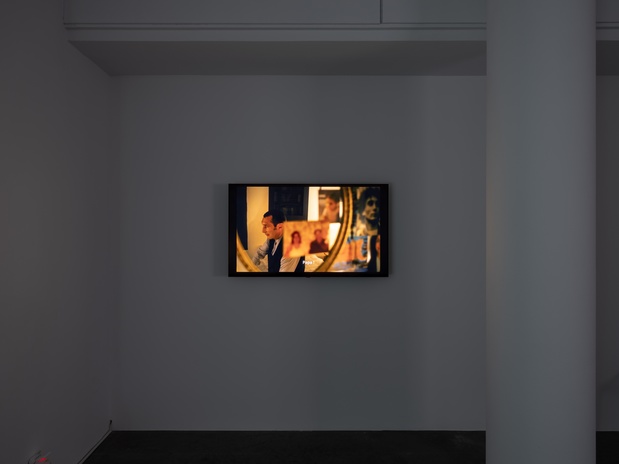
Deeply moving, the journey alternates between emotions and tonalities, capturing perspectives and condensed moments of meaning and sensation, in which the body and the face become the vehicles of a story oscillating between completion and continuity. Work, its value, its harshness, and the way it enters into the very constitution of the individual, of an existence that clings to it in order to carry on living. And this seemingly endless final day becomes the reflection of a lifetime of seemingly endless work.
If Rayane Mcirdi continues here his project of documenting the world through fiction, the latter takes on an additional dimension, referring not only to the artist’s life, but also to a father’s trajectory and choices, as well as to a culture: to his relationship with and taste for cinema. The casting of a figure from popular cinema such as Zinedine Soualem is itself part of the endeavour of a son who anchors his family history in a cultural lineage that has shaped it. By bringing his art and his gaze into dialogue with traditional cinema, embodied by figures who, whether they wish it or not, are invested with a sense of pride and admiration on account of their origins, Rayane Mcirdi also sets in motion a dance of reflections and mirror games that further enriches the work’s beguiling ambiguity, and even its kaleidoscopic scope.
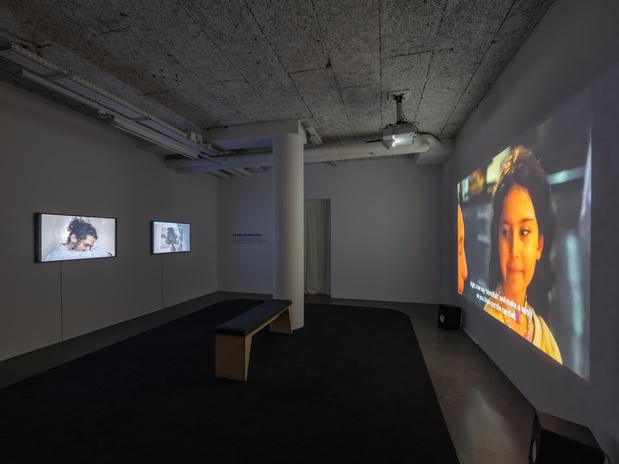
The appearance, towards the end of the exhibition, of the artist’s father in a lively interview, full of a mischievousness that contrasts with the actors’ deep immersion in the film sequences, further reinforces the transparency of an approach that reflects on its medium and its possibilities. It embraces the distance imposed by staging, as well as its ability to play with time and render this polyphony of temporalities, condensed into a single event. In the film, the end of a career carries the weight of a rich past as much as the promise of a future that might explore it anew. A deliberate and necessary detour towards rediscovering, in a sense, another truth: one that is less intimate, more universal.
For the artist’s documentary approach may have more to do with a realism of feeling, with an invention of ways of approaching human relationships which, through the very familiarity of their subjects, become explorations of what precisely does not happen: of those silences and unspoken words that cement inheritances and keep time with a story that breathes, endlessly.