C.h.a.i.s.e.s — New to the Wall Foundation, Paris pop-up
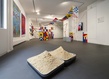
A delightful pop-up during Contemporary Art Week, the C.h.a.i.s.e.s project, supported by the New to the Wall Foundation, brings together, within a fascinating exploration of the life and use of the chairs in the Jardin du Luxembourg, left at the discretion of those who use its spaces, the visions of six artists working across a range of practices, from drawing to sound installation, from painting to sculpture.
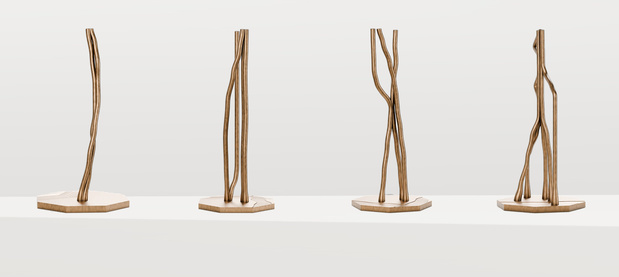
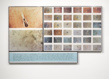
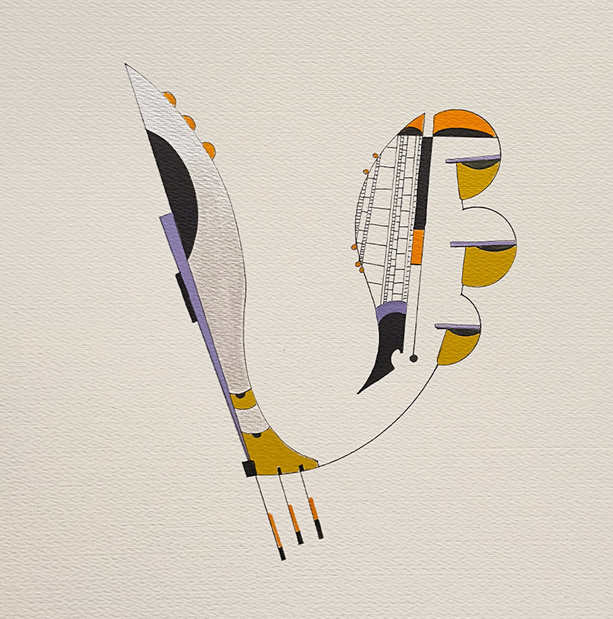
Warmth first emerges in the drawings (and the poetic mechanical inventions that accompany them) of Quinn Lewis, who, playing with the reflections and vibrations of the line, imbues his figurative work with an almost epidermal suppleness. In the hypersensitivity of Jessica Anne Schwartz’s drawings, it is the poetic force of the object, and its ability to present itself to perception in the form of images, that comes to the fore. She thus recomposes the movements and sounds of moments spent in the Garden into poetic scores, through drawings of exceptional delicacy, whose taut compositions manage to convey the extraordinary balance between strength and lightness. Dadaist and devilishly effective, Wayne Pate’s drawings orchestrate a procession of chairs that may be anthropomorphic or anthropophagous, swooping down upon the beings who have used them and imprinting themselves forever in their memories. Who, indeed, could forget the experience of reading, talking or meeting someone in the Jardin du Luxembourg, seated on one of these chairs?
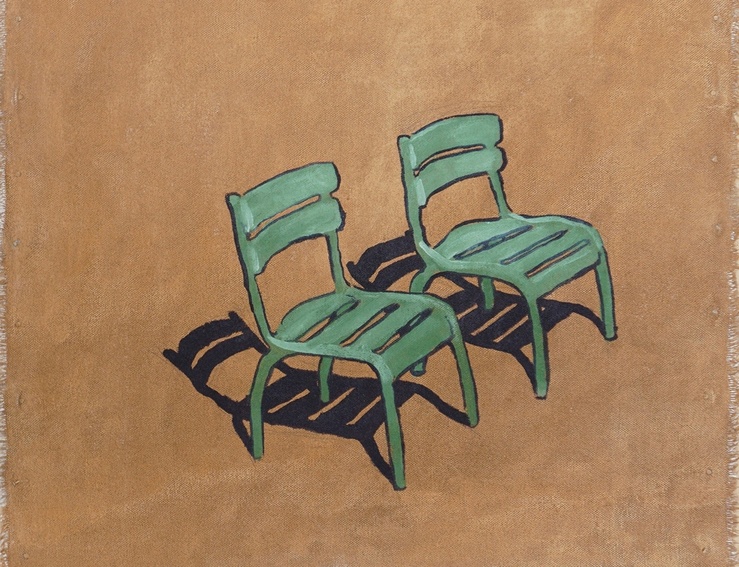
Rather than oblivion, it is absence that comes fully into play in Charlotte Tampol’s paintings and her staging of an unremarkable disappearance: that of an embracing couple who, in a companion painting, have left behind a bag of groceries. Beyond the artist’s technical mastery of light, the paintings overturn the relationship between subject and object, transforming the chairs from witnesses to the main story into guardians of the thousands of others unfolding there every day. And perhaps they have much to say; a hypothesis that Allard van Hoorn takes seriously in his installation. Here, one of these famous suspended chairs transmits its vibrations through an ingenious amplification system, setting its magnetic song in motion. Beside it, a roll of drawings borrows signs and symbols from philosophy, literature and poetry, giving them a mythology.
A form of life for him, resonating with all the other works on display; while the poetics of their movement undoubtedly have much to tell us, what is most urgent is that we preserve, by listening to them, these movements, these moments of freedom, invention and reverie that connect us to nothing other than one another, here and now.