Ariana Papademetropoulos — Galerie Thaddaeus Ropac, Paris
For her first exhibition in Paris, Ariana Papademetropoulos presents a tightly controlled descent into a restless inner world where symbols accumulate, knowledge dissolves into sensation, and technique is placed in the service of emotion. Her work moves with quiet precision from the language of New Age romanticism toward a more measured reflection on the absurdity of contemporary existence and the baroque complexity of how we communicate.
Born in 1990 and trained in California, Papademetropoulos has spent the past decade developing a practice that is both deeply personal and unmistakably of its time. It mirrors the visual logic of social media, absorbing its constant stream of images and performed identities. The artist frequently inserts her own likeness into her work, staging herself within the very environments she constructs. Yet this proximity to self representation does not diminish the rigor of her approach. On the contrary, her work is built on a precise manipulation of thresholds, between reality and projection, between image and distortion, where the visible world begins to fracture into something doubled and unstable. Each project operates on two levels at once, as both image and performance, shaped as much by her presence as by her withdrawal. Titled Glass Slipper, the exhibition is more elusive than it first appears. It unfolds as a careful balancing act between visual pleasure and the dismantling of fantasy, holding the viewer at a distance from the sensual pull of its imagery, except in its final gesture.
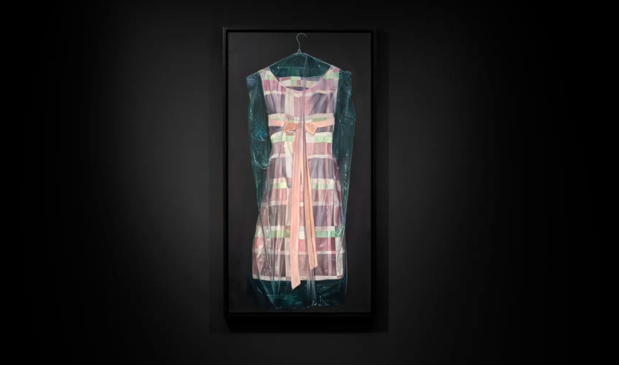
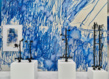
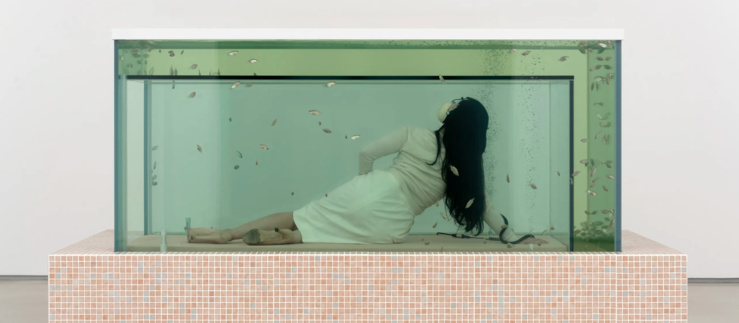
The opening room sets the tone. Two paintings of dresses sealed in plastic evoke garments that promise transformation yet remain inert, stripped of use or desire. They function less as objects than as a decadent and outdated facets of the same fantasy: the woman’s dress and the mistress’s dress, leaving the viewer exposed before the installation that follows. At the center of the space, a large aquarium suggests the ultimate stage for self presentation, a fantasy drawn directly from the aesthetics of online display. In practice, however, it resists easy participation. The body must contort, the viewer must wear a cumbersome wired headset, and the seamless image of the self collapses under physical constraint. What emerges instead is a fractured experience, where painting and installation converge into an open ended narrative.
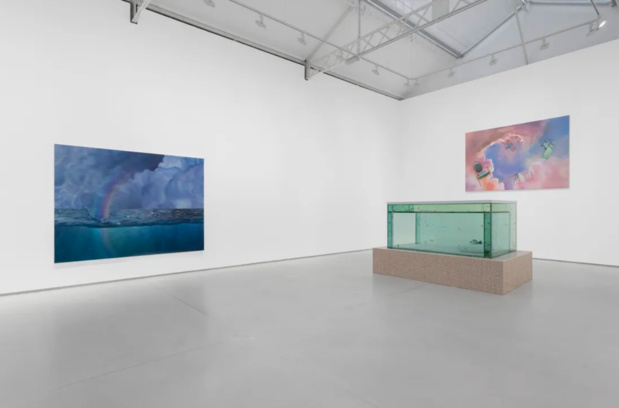
Despite its polished surface, the exhibition insists on solitude. It demands a withdrawal from the world and from the constant negotiation of one’s own image. The body becomes awkward, entangled, removed from its usual codes of presentation. Beneath the seductive clarity of the installation lies a colder structure, one that links the polished language of advertising to the emptiness it conceals. Papademetropoulos gives form to a distinctly contemporary isolation, in which the subject remains suspended between the beauty of fantasy and the need to shield itself from the world beyond it.
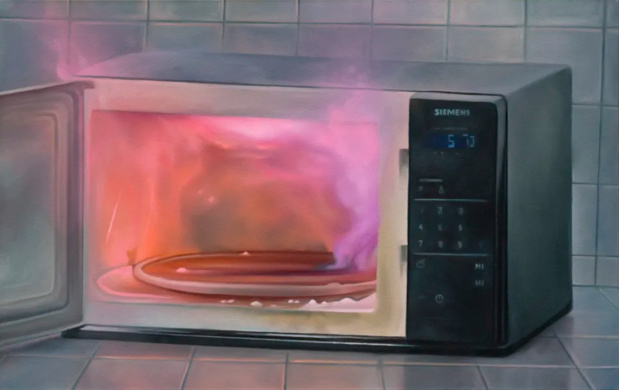
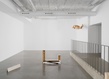
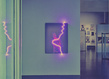
Upstairs, this tension sharpens. Three vintage telephone booths introduce a more intimate register, their nostalgic design tinged with a deliberate sentimentality. Through the receivers, a fortune teller delivers a reading of the artist, adding a layer of theatrical introspection that borders on the ornamental. Yet this gesture gains weight through its confrontation with a series of paintings depicting microwave ovens in flames. These works are striking, their surfaces animated by fire that feels almost alive, and they destabilize the symbolic language that surrounds them. The contrast is pointed. On one side, a stream of familiar, exhausted imagery. On the other, an opaque material process that resists interpretation. For the viewer, the gap between these two realms remains unresolved, as obscure as the invisible transformations within a machine or the intangible movement of emotion through fantasy. Knowledge becomes the only possible anchor.
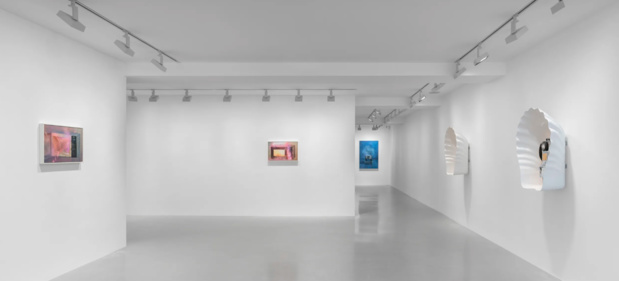
Without it, the exhibition leaves us suspended between two orders of reality, the physical and the psychological. In the final painting, smoke gathers into a form that suggests an inner turbulence, a quiet image of disorder at the core of the self. The title Glass Slipper ultimately resonates less as a fairytale reference than as a condition. It evokes a surface that appears transparent yet remains unstable, an existence poised between exposure and fracture.
Ariana Papademetropoulos, Glass Slipper, 07 March to 11 April 2026, Thaddaeus Ropac, Paris Marais, 7 rue Debelleyme, 75003 Paris