Booth & Both — Montrasio Arte, Paris pop-up
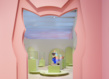
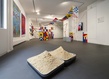
During Paris Contemporary Art Week, Montrasio Arte presents a major exhibition in its pop up space in the Marais, where art unfolds through a series of dialogues that extend beyond their original voices.
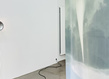
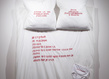
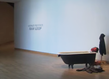
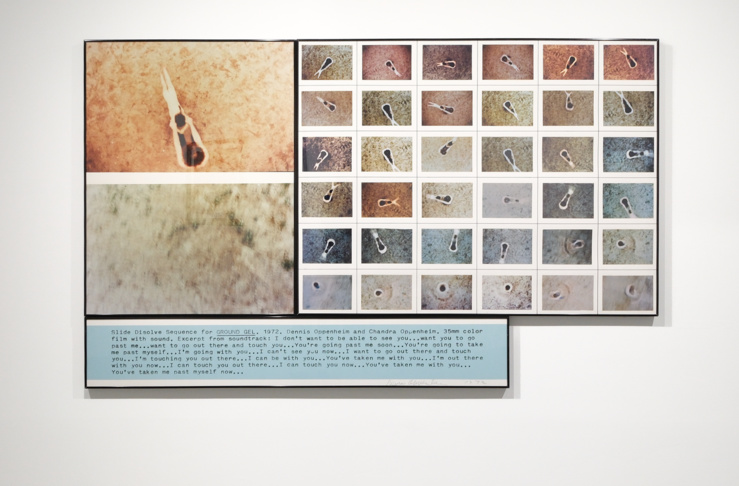
Direct echoes, such as those between the paintings of Cremonini and Leoncillo, give way to historical connections, most notably the fertile association between Gordon Matta Clark and Dennis Oppenheim. As the research accompanying the exhibition reminds us, their paths crossed when Matta Clark was still at the very beginning of his career. This connection proves particularly compelling, as the juxtaposition of their respective works reveals a shared capacity to alter the world in order to bring its essential light into focus. Beyond this, these emblematic works reveal a poetic dimension, a sense of solitude that remains profoundly inhabited, conveying a poignant sensibility emerging from even the most radical forms of minimalism. The mirror held up between the two bodies of work becomes a remarkable chamber of echoes, where Gordon Matta Clark’s fractured stone gives rise to a flash of light that finds a striking visual counterpart in Oppenheim’s carefully orchestrated cuts across the surface.
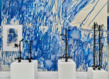
A defining feature of the gallery’s programme throughout the year, the juxtaposition of historical works finds its fullest expression across the exhibition. Contrasts, flashes of light and gestures that twist and reshape matter offer shifting visions of the landscapes and worlds we inhabit, revealing unexpected affinities. The flashes of colour that punctuate Cremonini’s paintings, for instance, invite comparison with the material fissures captured by Gordon Matta Clark. The exhibition also offers Parisian audiences an opportunity to immerse themselves in the existentialist intensity of Bepi Romagnoni, a brilliant but short lived figure of existentialist realism. His work captured the contradictions of a postwar society determined to confront its own mortality. This vision seems to provide the exhibition’s underlying thread. What emerges is a profound reflection on “decomposition” in its most literal sense, as each artist seeks to situate their practice within history while refusing to offer an absolute image of the world. Instead, their works explore the world’s urgency through its relationship to our own transformations.