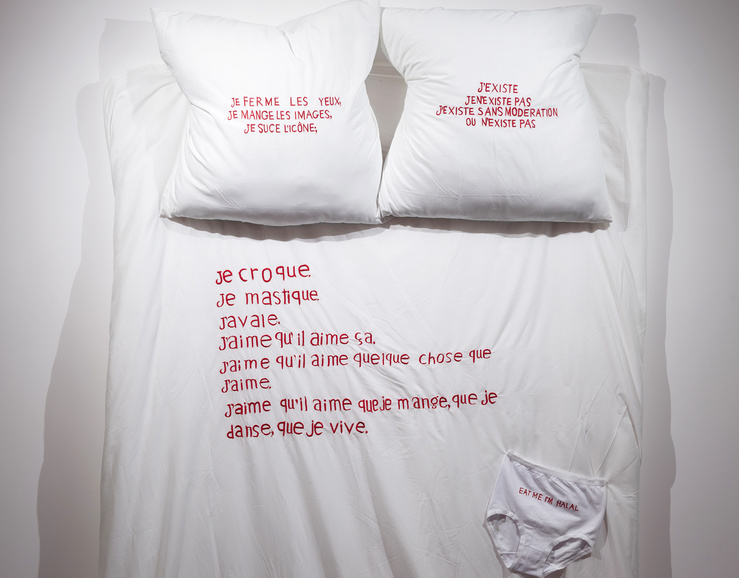
Le Bal des Ogresses — ICI, Institut des cultures d’Islam
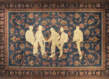
With Le Bal des Ogresses, ICI takes hold of the figure of Aïcha Kandisha, who, resistant to any stable representation, lives on and endures through her plasticity. A creature from the Maghrebi oral tradition whose stories are passed on without ever settling into a single image or a single institutional narrative. Without formalising her face, the project multiplies her appearances, bringing out sister figures, doubles, echoes and counterpoints.
Le Bal des Ogresses @ ICI Institut des cultures d'Islam from September 26, 2026 to February 7, 2027. Learn more But above all, it disturbs her world and reshuffles the cards of any univocal reading of mythologies by embracing their profoundly plural and plastic nature. The exhibition The Ball of Ogresses draws, around this anthropomorphic monster and symbolic vehicle for the reification of femininity in societies that have incorporated patriarchy as a mode of organising the imagination, a variation that reverses, through joy and invention, the force of the attack.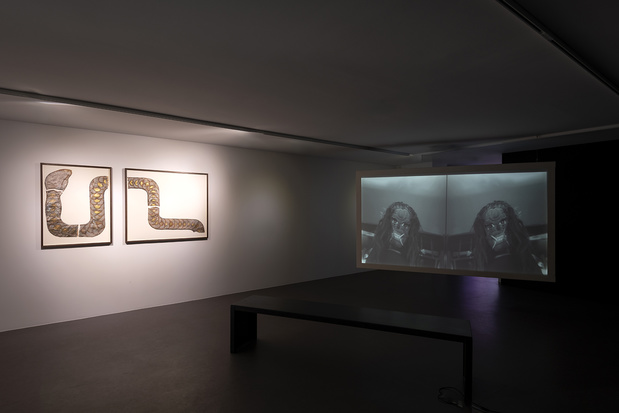
Through thirteen propositions, women with a power that is otherwise far more troubling and alive — the power to create — celebrate their appetite for life and transformation in order to examine their own ability to emancipate themselves from illusions that condemn them for what they are. ICI thus proposes a dense, plural and polymorphous journey in which singular practices communicate through intensities more than through formal correspondences, but nonetheless manage to invent a dialogue that goes beyond, with an audacity and depth that can only be welcomed, societal boundaries that have fortunately been erased. Embracing the symbol fully, or on the contrary attempting to détourne it, to reinvent it in order to appropriate its strength, the artists multiply inventions and approaches in order to underline, through the absurd or through reason, the complexity of a representation whose testing reveals its fertility.
An indeterminacy at the heart of the exhibition. Aïcha Kandisha becomes an imaginary matrix, a space of projection where fear and desire, seduction and threat, beauty and monstrosity, cruelty, intelligence and stupidity meet. All of them together. And all immersed in these same contradictions which the artists take hold of, without naivety.
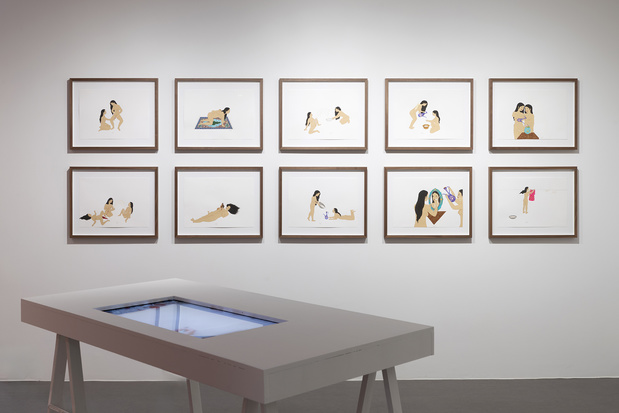
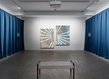
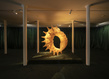
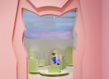
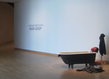
Finally, on a purely scenographic level, one should note the space given to each of the artists, all of them benefiting from a presentation of several works that offers a real glimpse of their practice. An approach that is, once again, worth highlighting, as are the efforts of the institute in its support of production, which gives the presentation all its narrative force and allows the “ball” of the title to take on its full meaning. As we discover it, the exhibition plays with the rhythms of observation, moving from contemplation and reflection to the symbolic, even epileptic, shock of passionately contrasting aesthetics. From a threat, the ogress becomes a symbol of joyful power, with which to play, think and dance.
Her oral roots emerge fully in each of the artists’ propositions; an intimate background noise, a voice caught, in its own way, within the imagination of each of them, here finding the opportunity to look with us at the very nature of the unthought and to expose it, if not to tame it. Until perceiving, in the echo of its surreal nature, material with which to tend to the visceral fractures, very real ones, which, despite the danger and in the image of Aïcha Kandisha, one might perhaps dare to love.