O des origines — Centre Tignous, Montreuil
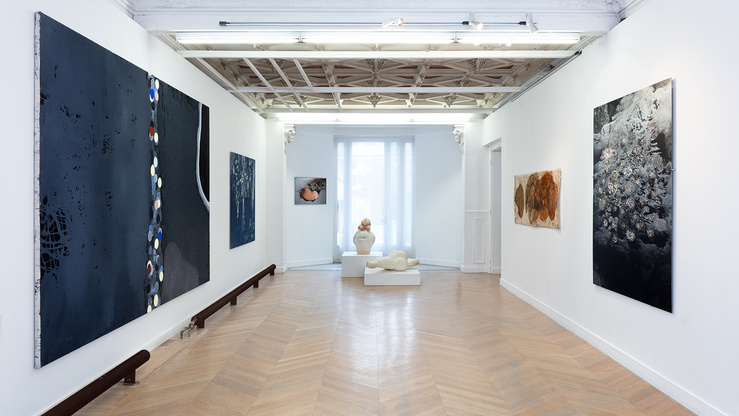
Blending history, imagined projections, oral traditions, and visual invention, the exhibition O des origines explores the founding narratives that shape our understanding of the world and its possible futures.
O des Origines @ Le Centre Tignous d'Art Contemporain from May 7 to July 18. Learn more With a subtle poetic ambiguity, the exhibition follows multiple paths through the imagination. Each work acts as a gateway to a form of prehistory that reveals as much about what lies ahead as it does about what came before. Here, the artists approach the notion of origin as a territory to be revisited and reimagined, offering a rich range of visions in which secret rituals, expressions of nature, collaborations with natural processes, and symbolic encounters come together to suggest compelling possibilities for human development.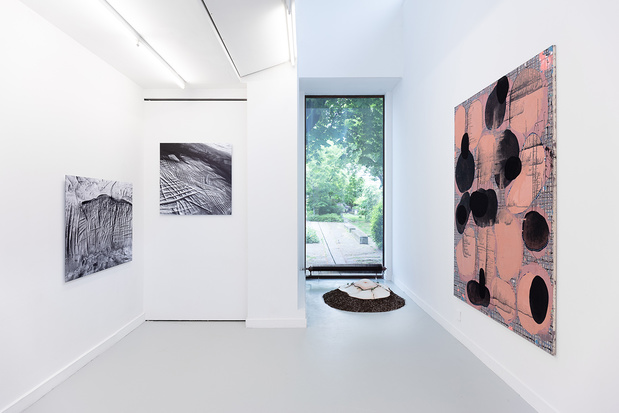
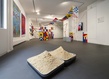
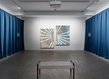
From Clément Borderie’s process based works, which allow matter itself to shape abstract forms rooted in landscape, to Olivier Peyronnet’s clusters of stones that rise like organic, almost sensual menhirs, the exhibition unfolds through a series of resonances. Laurence Nicolas presents the striking image of a naked body framed within the fissure of a concrete cocoon, while Emmanuel Rivière’s surreal photography creates ambiguous surfaces that evoke the moving landscape of an undiscovered world. Together, these works converse and respond to one another, inventing their own forms of communication. Neither purely symbolic nor fully abstract, the exhibition invites viewers to feel before they interpret, while maintaining a depth of thought that engages with science as much as it expands its horizons.
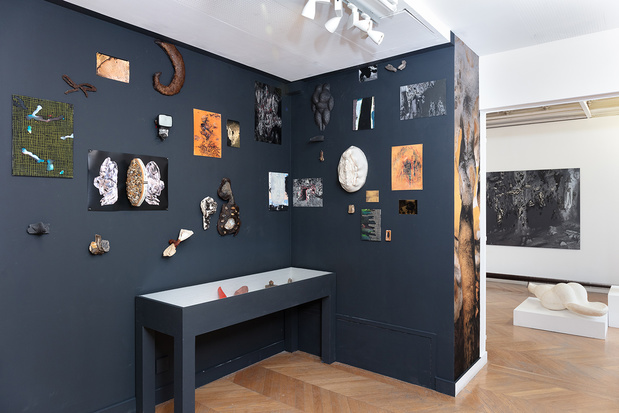
Guided by a carefully paced rhythm that alternates between contemplation and close observation, the exhibition establishes a distinctive visual atmosphere where ochre tones blend seamlessly with shades of beige. Art becomes the catalyst for a dialogue between different fields of knowledge.
In this context, mineral forms seem to come alive, speaking to our own bodies and suggesting a productive relationship with the ground beneath us, a ground that not only supports us but also helps us grow.