Alina Szapocznikow — Galerie Loevenbruck, Paris
At Galerie Loevenbruck, forms and intentions intertwine in a captivating dance. Bodies appear frozen in matter, yet they continue to pulse with a quiet, underlying energy. Spread across two chapters, this monographic exhibition reveals the work of Alina Szapocznikow in all its complexity. Combining ambition, openness and, ultimately, a striking directness, it showcases a creative freedom that shaped one of the most distinctive artistic voices of the 20th century.
Alina Szapocznikow — Autobiography in Fragments — A Centenary Retrospective @ Loevenbruck Gallery from May 22 to July 31. Learn more Born in Poland in 1926 to a Jewish family, Szapocznikow survived deportation and Nazi concentration camps while still a teenager. The experience left a lasting mark on her work, which reflects an acute awareness of the fragility of both the body and the forms through which we try to represent it. After studying in Prague and Paris and returning to Poland in the early 1950s, her career was repeatedly disrupted by illness. Yet she continued to reinvent her practice, treating each new phase of her work as an opportunity to rethink her artistic language. Her sculptures carry traces of emotions that seem embedded within the material itself. Memory, desire, loss and humour coexist and collide, reflecting a life driven by experimentation and invention.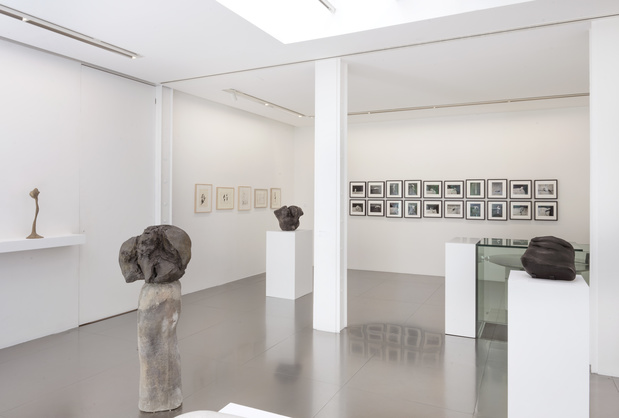
Something continues to circulate through these transformed fragments and altered bodies, these sculptural presences that seem only partly anchored in the visible world. Reality is shifted slightly off course, finding a delicate balance where representation gives way to lived experience. Biography remains an important thread running through the work, not as a fixed explanation but as an active force that nourishes it from within.
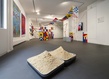
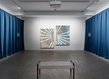
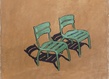
The exhibition is impressive without ever becoming overwhelming, poetic without retreating into obscure symbolism. Drawings, thoughtfully displayed alongside the sculptures, reveal how deeply Szapocznikow’s thinking about form was rooted in sketching, observation and intuitive mark making. Seen at eye level, they create a sense of closeness and shared intimacy, opening a space where imagination and the uncanny meet. Human in scale, each work becomes a focal point, drawing viewers into its orbit.
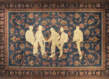
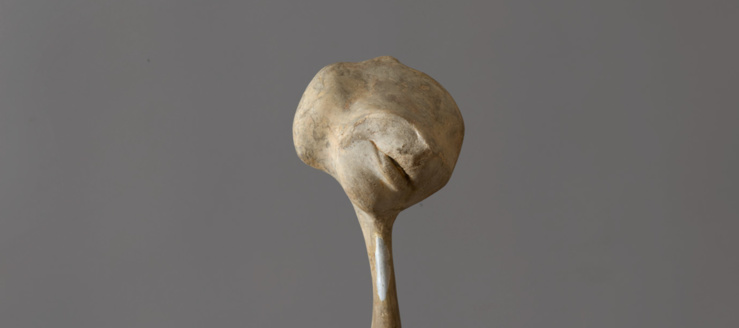
In Szapocznikow’s art, everything seems to be in a state of transition. Bodies become sensations. Fragments take on a strange independence. Resins, casts, imprints and organic protrusions appear to hold onto something that remains just beyond reach, resisting both interpretation and intention. Images survive their own disappearance. Her sculptures are shaped by the logic of the trace, at once insistently present and irretrievably distant.
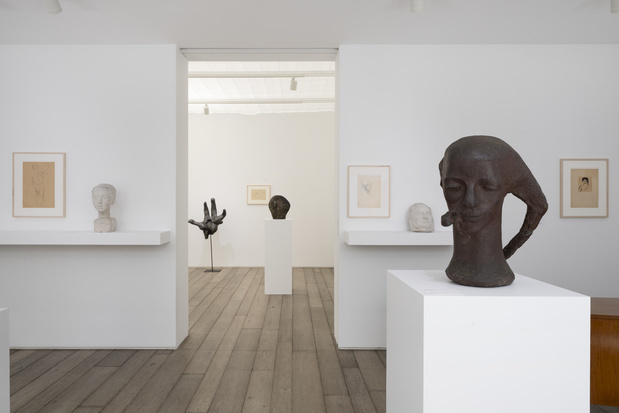
It is fitting, then, that the exhibition is infused with the restless calm that runs throughout her work. Beneath the weight of the materials, something unexpectedly light endures: a way of thinking about space that is constantly renewed through the evolving history of each object.
Across every stage of her career, Szapocznikow explored a fertile territory between abstraction and figuration, between the surreal and the deeply personal. Her work brings together surrealist abstraction, an almost impressionistic sensitivity and a distinctly emotional form of conceptual thinking. The result is a body of work that never settles into a single meaning, instead inviting a continual shift in perspective, where matter and living memory become inseparable.