Héloïse Farago — Galerie Florence Loewy
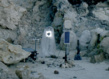
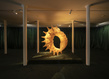
In Héloïse Farago’s exhibition at Florence Loewy Gallery, playfulness, decoration and imagination come together to transform the space in unexpected ways. The visual language feels familiar, drawing on the worlds of celebration and domestic life, yet the scale of the works unsettles our usual points of reference. Objects appear larger or smaller than expected, disrupting the proportions through which we make sense of reality.
The exhibition’s title warns of “rififi”, a playful expression suggesting trouble ahead. But the real disturbance lies elsewhere: in the way Farago overturns expectations. What initially seems recognisable gradually slips into something stranger, inviting visitors to question the rules and conventions that normally shape their experience of space, objects and narrative.
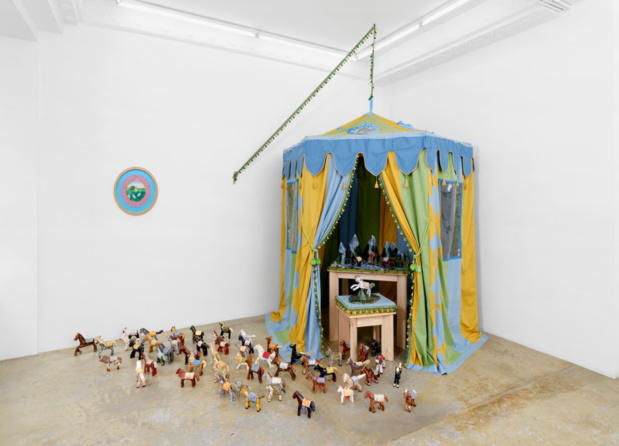
A graduate of the Villa Arson art school in Nice, Héloïse Farago works across performance, installation, painting and assemblage, bringing together artistic traditions and vernacular forms. Populated by imaginary beings and rich with cultural references, her work blends wonder with stories of female resilience and self determination. These narratives quietly inhabit her installations, watching over the worlds she creates.
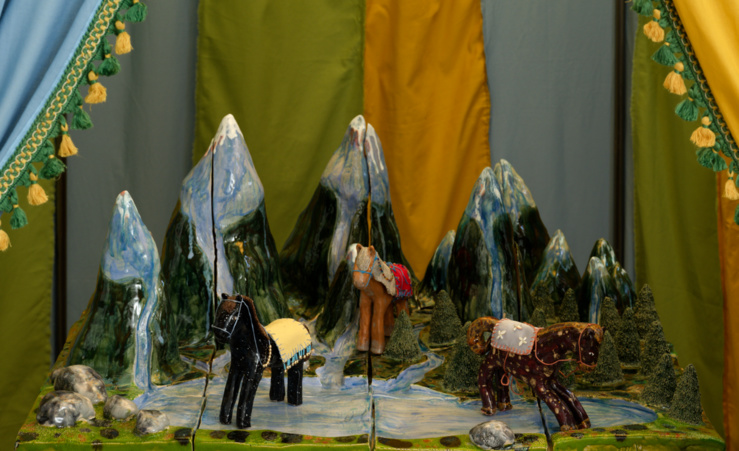
In Farago’s universe, small horses, knightly figures and hybrid creatures seem to have wandered in from an unknown realm. They gather, play and celebrate according to their own rules. Here, play becomes adventure and leisure becomes a means of survival. Different worlds overlap and merge until their boundaries dissolve. With a childlike sense of possibility, Farago transforms the simplest materials into vehicles for imagination. Figurines, scraps of fabric, thread and hand drawn signs become the building blocks of expansive narratives. A kind of existential toy that, taken seriously, seems capable of throwing reality off balance.
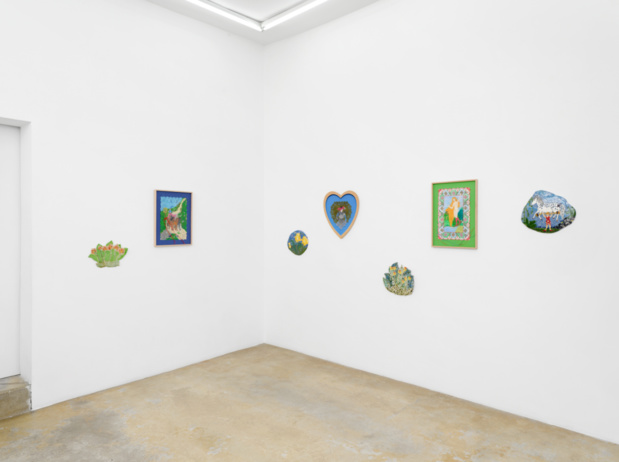
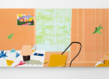
Her work embraces contrast. Soft pastel colours coexist with references to the circus, parades, craft traditions and popular forms of entertainment. There is no hierarchy between materials or techniques. Sewing, ceramics, felt tip drawing and pen sketches all contribute to a visual language that draws equally on centuries old folklore and on the freedom to reinvent it. In Farago’s hands, these traditions become witnesses to fantastical stories, invented myths and secret legends.
What might first appear gentle or naïve gradually reveals something more complex. Her work opens up the possibility of other ways of being and imagining. These are worlds that are more porous, sometimes harsher, yet also more open to movement and transformation. They invite encounters with others and suggest forms of coexistence built on curiosity, recognition and exchange.
Rififi, Solo exhibition by Héloïse Farago, May 5 — June 19, 2026, Galerie Florence Loewy, 9–11 Rue de Thorigny, 75003 Paris, France