L. Camus-Govoroff — Galerie Edouard Manet, Gennevilliers
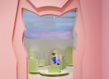
At Emba Gennevilliers, L. Camus-Govoroff presents a remarkably coherent and assured exhibition that plays with thresholds and transitions, solids and voids, to build a nuanced exploration of perception and sensitivity.
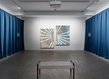
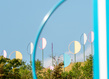
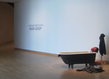
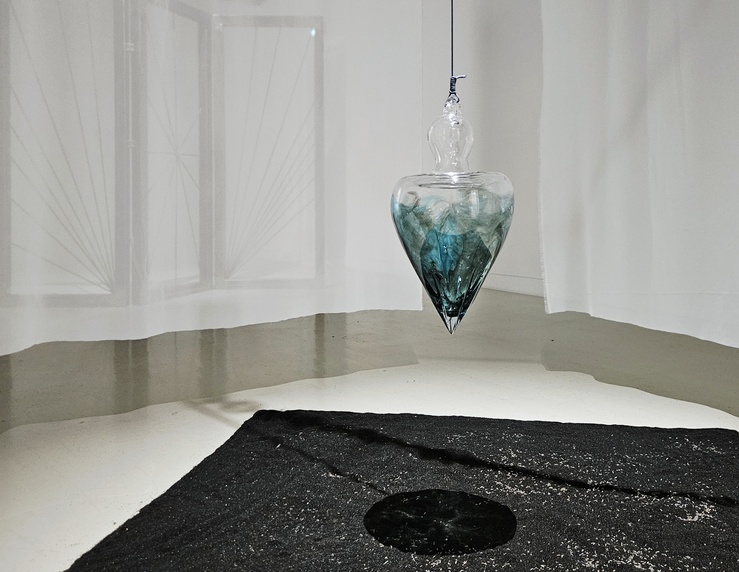
L. Camus-Govoroff — Le Bruit des larmes @ Edouard-Manet de Gennevilliers Gallery from March 28 to June 6. Learn more Encounters and discoveries emerge through a fluid treatment of materials, where density and contrast, and by extension alterity itself, are understood through their capacity for transformation. However pronounced they may be, the tensions that shape this sensory journey are experienced less as conflicts than as stages along a quiet drift through paradox.Distinctive and unexpectedly warm beneath its sharp minimalism, the exhibition places experience, both imagined and lived, at its centre: the artist’s attention towards us, and our attention towards what remains beyond our grasp. The works span sculpture in iron and glass, video, and stained glass. Together they create an aesthetic built on transparency and concealment, weight and suspension. Yet the exhibition never dissolves into ambiguity for its own sake. Camus-Govoroff maintains a strong sense of presence throughout, developing an installation that genuinely inhabits the space it occupies.
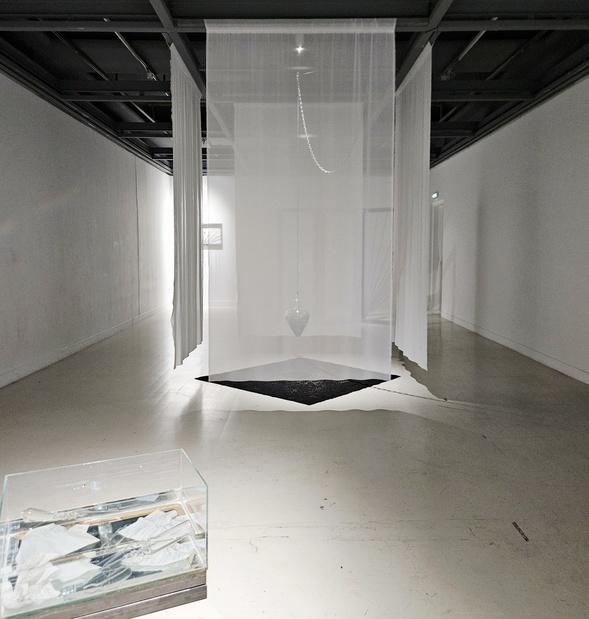
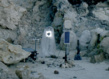
There is an unusual steadiness within this fluidity, a hardness in the line that never collapses into aggression. Sharp angles suggest the possibility of extension and branching forms, while concave structures become arches capable of supporting further imagined constructions. It is hardly surprising that spider webs count among the artist’s enduring fascinations. As the viewer moves through the exhibition, abstraction and an economy of means somehow convey an unmistakably welcoming impulse. This becomes particularly tangible in the striking installation of a swing facing a body of water that appears both restless and calming at once.
The work awakens a desire to touch and to feel, born from these encounters between surfaces, from the alternation of hard and soft forms, but also from the latent presence of water itself. This water of tears, accompanied only by the persistent hum of an ode to suspension, permeates the exhibition from beginning to end.
Out of this renewed encounter with alterity, out of the counterpoints embedded within the artist’s forms, and out of the precarious balance continually tested by the works, right up to the divergent figure of the fool who greets visitors at the end of the exhibition, a shared gesture begins to emerge. It suggests the possibility of movement between states, between realities that appear irreconcilable, except perhaps in what matters most.