Chechu Alava — Galerie Xippas
Presented in a quietly powerful exhibition at Xippas, Chechu Alava’s paintings balance radiance and introspection, intimacy and immediacy. For more than two decades, the Paris-based artist has explored the representation of women through portraits that feel both deeply personal and politically charged. Her paintings don’t announce their intentions loudly. Instead, they draw viewers in slowly, through atmosphere, texture and light.
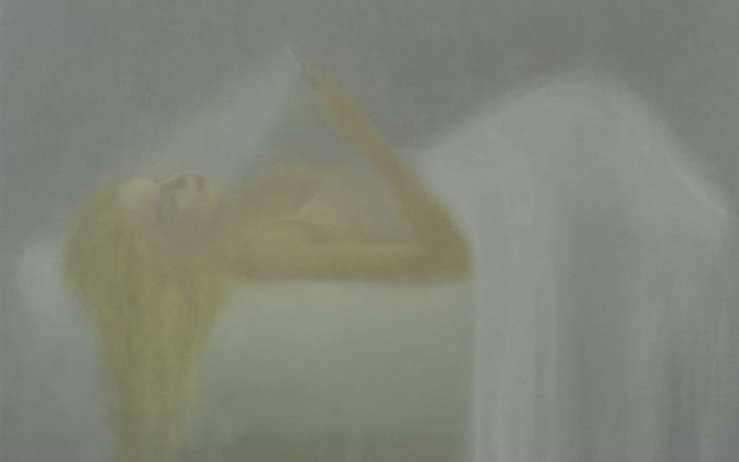
Chechu Alava — The Hall of Mirrors @ Xippas Gallery from April 25 to June 6. Learn more Trained at the Fine Arts school in Salamanca and devoted to painting since the mid-1990s, Alava revisits classical imagery without treating it as untouchable. Her work often places historical and religious references into contemporary emotional space, allowing old symbols to take on new meanings. One of the exhibition’s key works echoes Juan Carreño de Miranda’s 17th-century “Penitent Magdalene,” but Alava’s version resists the traditional image of repentance. Her women appear suspended between contemplation and self-awareness, illuminated by the glow of screens that feel both revealing and oppressive.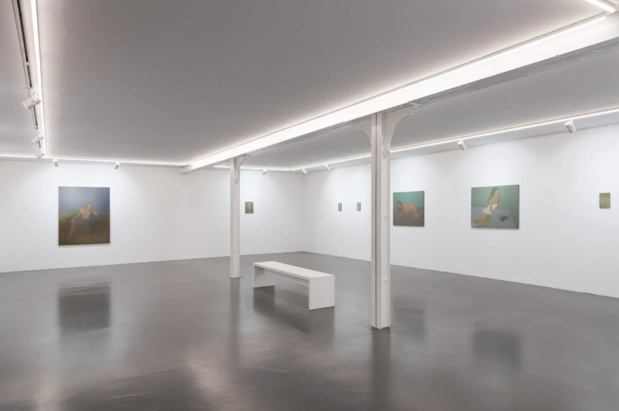
Those screens recur throughout the exhibition, acting almost like transitions between scenes. Their proportions resemble smartphone displays, and within them Alava inserts fragments of contemporary reality — traces of violence, memory and media saturation that refuse to disappear.
Yet the paintings never become didactic. Averted gazes, casual gestures and domestic clothing keep the figures from turning into symbols alone. Alava seems less interested in delivering fixed messages than in preserving the complexity of individual presence. Her work pushes back against easy categories and reductive ideas about gender.
Across the exhibition, women emerge from shadowy backgrounds with a striking sense of persistence and vitality. These figures feel connected by invisible emotional threads, as though each painting were part of a larger map of interior lives. The result is work that feels at once delicate and forceful: paintings that borrow from tradition while quietly reshaping it from within.