Melvin Edwards — Palais de Tokyo
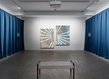
The Palais de Tokyo opts for sobriety and an intelligence of forms with an exceptional and perfectly mastered exhibition of the sculptural work of Melvin Edwards, restoring for the French public his full place in the history of sculpture and situating him within a rich and inspiring spiritual continuity oscillating between universality of expression and particularism of expression.
Having come to his characteristic gesture of welding in the 1950s through a chance encounter but already familiar with sculpture and drawing through his studies, Edwards traverses the second half of the twentieth century alongside works of a radical avant-garde (Julio Gonzalez, Jean Tinguely, Anthony Caro, Alexander Calder) that nourished and inspired him. A companionship rather than a formal heritage for this artist whose influences and inflections, as François Piron, co curator of the exhibition, notes, are understood above all through his friendships with the painters Frank Bowling, Jack Whitten and Souleimane Keita, the sculptor Richard Hunt, as well as with the poet Jayne Cortez.
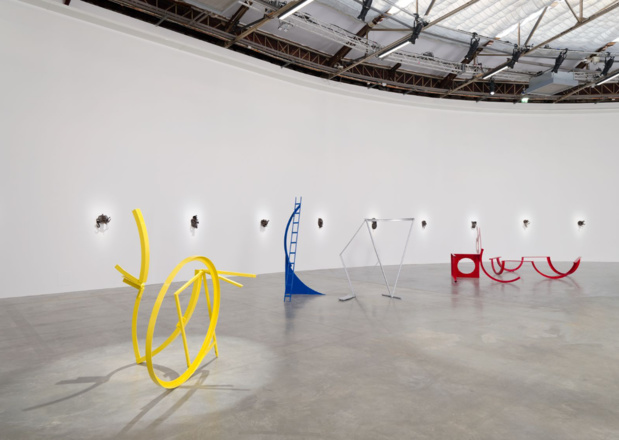
Indeed, from his earliest works he instills a political dimension that reflects the events of the time, the constant violence and oppression of African Americans across the country. Systematic lynchings thus give the generic title to works, the Lynch Fragments, each born of a dramatic episode of this suffocating reality that was then reflected every day in the press. Placed at eye level, each piece in the series confronts us and projects us, according to the artist, “as if facing a face”.
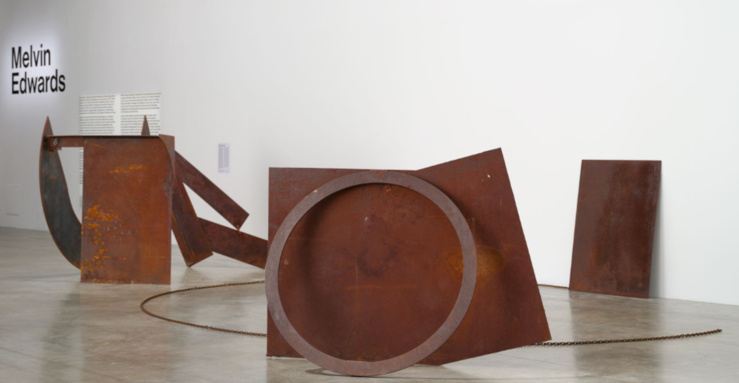
Suffocating and terrible, this dimension nevertheless does not exhaust the life force of this practice which escapes all reduction. In its image, therefore, the exhibition breathes the intensity of a creation traversed by the lines of a time that has become blunt, where sharp angles and barbed motifs contradict the plasticity and lightness of its unfolding. At times lifted, at times heavy, the forms alter perception and maintain a perpetual tension, revealing behind their trompe l’oeil abstraction a testing of our trust in form. Between seduction and impact, a continuous line, agile and welcoming to all viewers, whether informed or not, flirts with conceptual experimentation without sinking into formal reduction. Eager to invest his feelings, history and the world into his assemblages, Edwards welds together materials and forms that have nothing in common to build constructions as vivid and as striking as the encounters from which they arise.
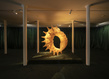
Visually, monumentality seems here contained within almost domestic dimensions, and the play on voids and simple associations marks a form of expression more essential, more urgent than the race toward gigantism pursued by some of his contemporaries. In a strange and sometimes haunting symbolism, Melvin Edwards’ pieces weave bridges between key ideas and the vibrant thoughts of figures he replays in matter, in his own way. In this sense, his art art stands out, fortunately, through a form of humility despite his stated ambition to make each piece an assertion of a possible form.
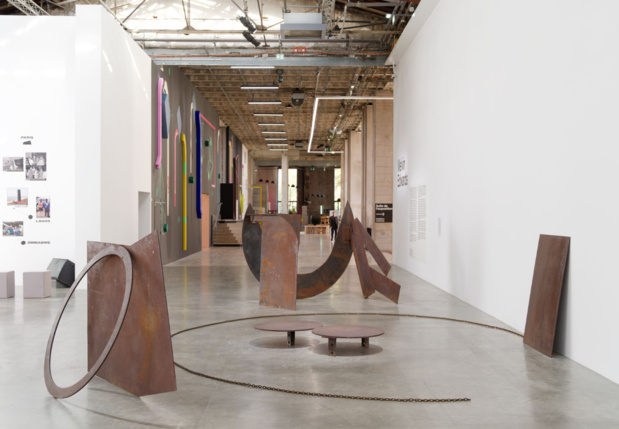
The idea, far from erecting itself as a form of quest for the absolute, integrates into the whole and contributes fully to the effectiveness of this presentation at the Palais de Tokyo. Each piece extends an inner dialogue and takes its place within a horizontal approach of connecting the world’s consciences, with historical points of force but without hierarchical domination, whether of matter or of history.
A moving reflection of an art that, in Edwards’ own words, has always striven to invent its own engine of inspiration and which in turn inspires the new generation, notes Amandine Nana, co curator of the exhibition, through figures such as Char Jeré, Tiona Nekkia McClodden or Cameron Rowland. An art finally that retains its share of mystery and weaves, through the secret of intimate connections like the resonance between the flower called “bird of paradise” from his childhood and Charlie Parker, whom he admires, nicknamed Bird and himself the author of the song Bird of Paradise, a constellation of possible readings that this parcours reflects, ultimately far more aerial than its masses of steel would suggest.
A secret above all that speaks volumes about the singular dynamic between the inertia of matter and the fleeting realities that have shaped it, between the coercion of the chain and the absolute freedom of the homage to those who manage to melt them.
Melvin Edwards, Palais de Tokyo, 13 Avenue du Président Wilson, 75016 Paris — From 22/10/2025 to 15/02/2026